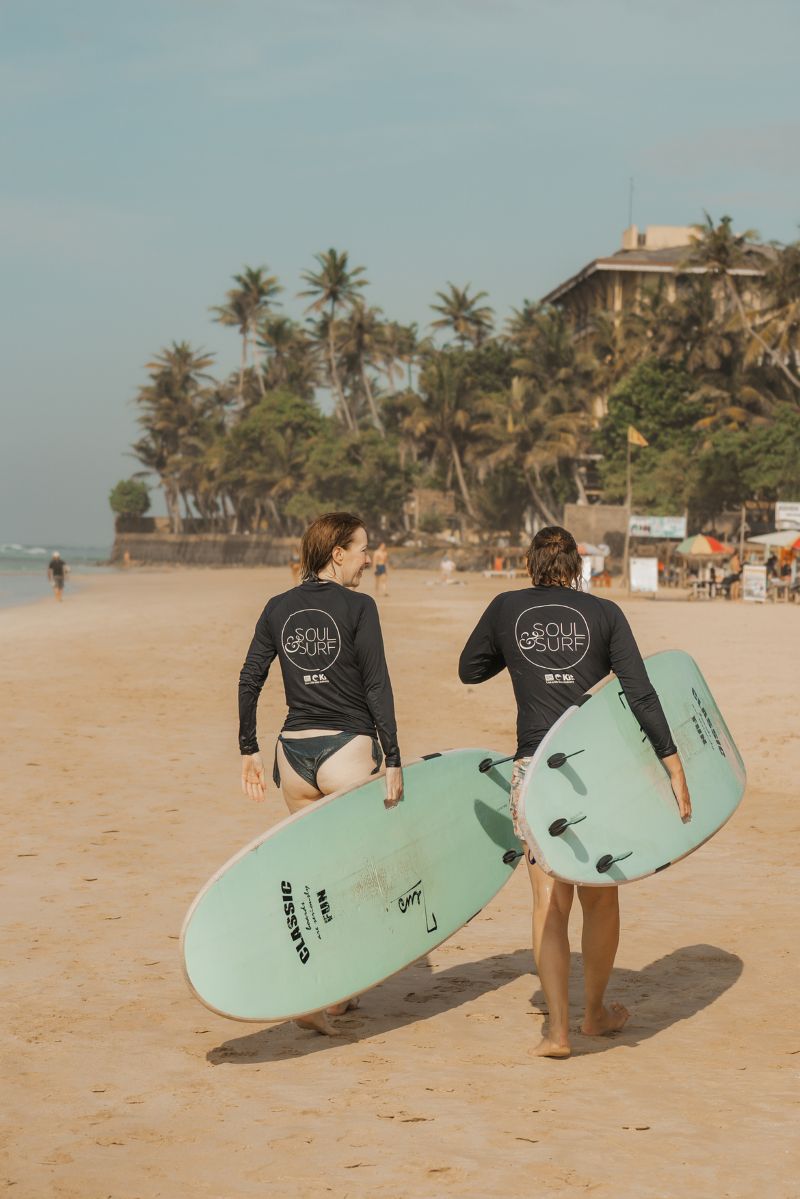


Thinking about surfing in Sri Lanka for beginners? Find out what to expect from your first week, how surf lessons work and how to choose the right surf camp.
Rachel Lingham | 3rd November 2026
A week of falling off, getting back on and the odd glorious three seconds of standing up. Here's what to expect.
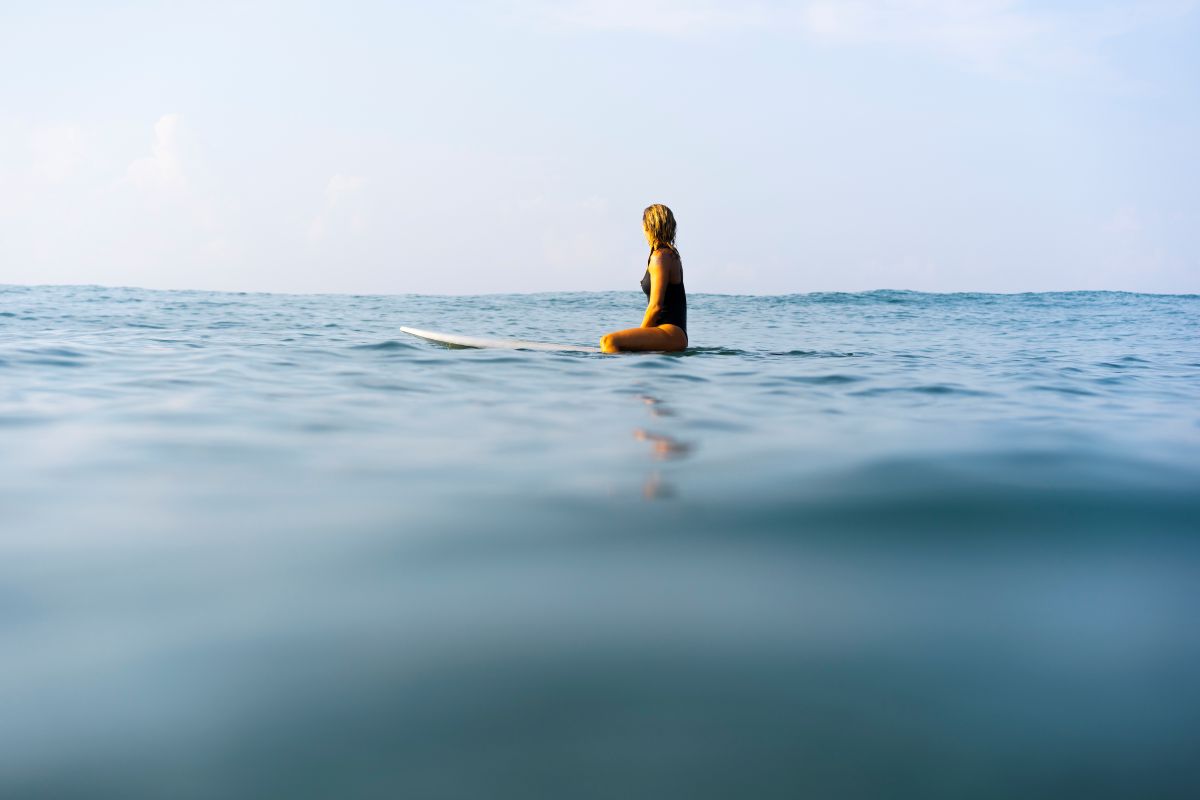
PC: @gabriellazagni
Some people take up golf. Some people take up sourdough. And some people fly to the south coast of Sri Lanka to be repeatedly knocked over by the Indian Ocean in front of strangers.
If you’re in the third camp, good. Pull up a sun lounger.
Learning to surf is a funny old business. Day one is mostly lying on a slab of foam and inhaling seawater, which exits your nose approximately 6 hours later over dinner. Then, usually around day three, a wave picks you up, you get to your feet, and that’s it. You’re done for. Hooked. Already pricing up a van and a move to the coast.
Yes, Sri Lanka is a great place for beginner surfers. The sea is around 28°C all year, so you can learn in a rash vest rather than a wetsuit, and the south coast around Ahangama has soft, mellow, rolling waves and sheltered breaks that are ideal for beginners and intermediates.
At Soul & Surf in Ahangama, the coaches pick a beginner-friendly spot each day to suit the conditions and the group. So you get nice warm water, friendly waves and somebody who knows which beach to go to. That’s most of the battle when you’re starting out.
Sharon, who came to us in January after a surf camp in Indonesia, put it nicely: “The waves have been beautiful, soft, and rolly. Perfect learner wave, I think.” We couldn’t have said it better. We have tried.
Let's get this out of the way. You won't be an expert by Friday. Nobody is. Anyone who says otherwise probably has a timeshare going cheap as well. At Soul & Surf, surf lessons follow the Soul of Surfing programme, which runs from Level One up to Level Four.
If you’ve never surfed, or you’ve had a few goes and are still riding the foamy stuff, you start at Level One: Becoming a Beginner Surfer.
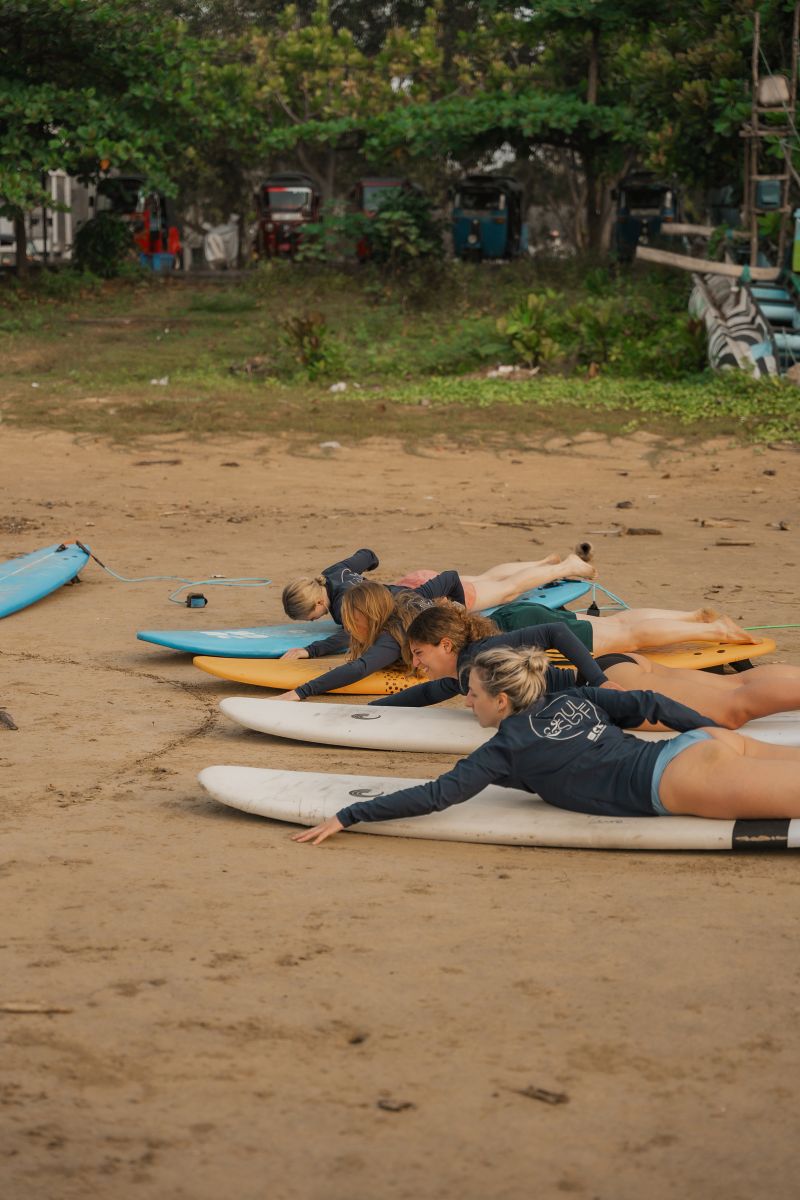
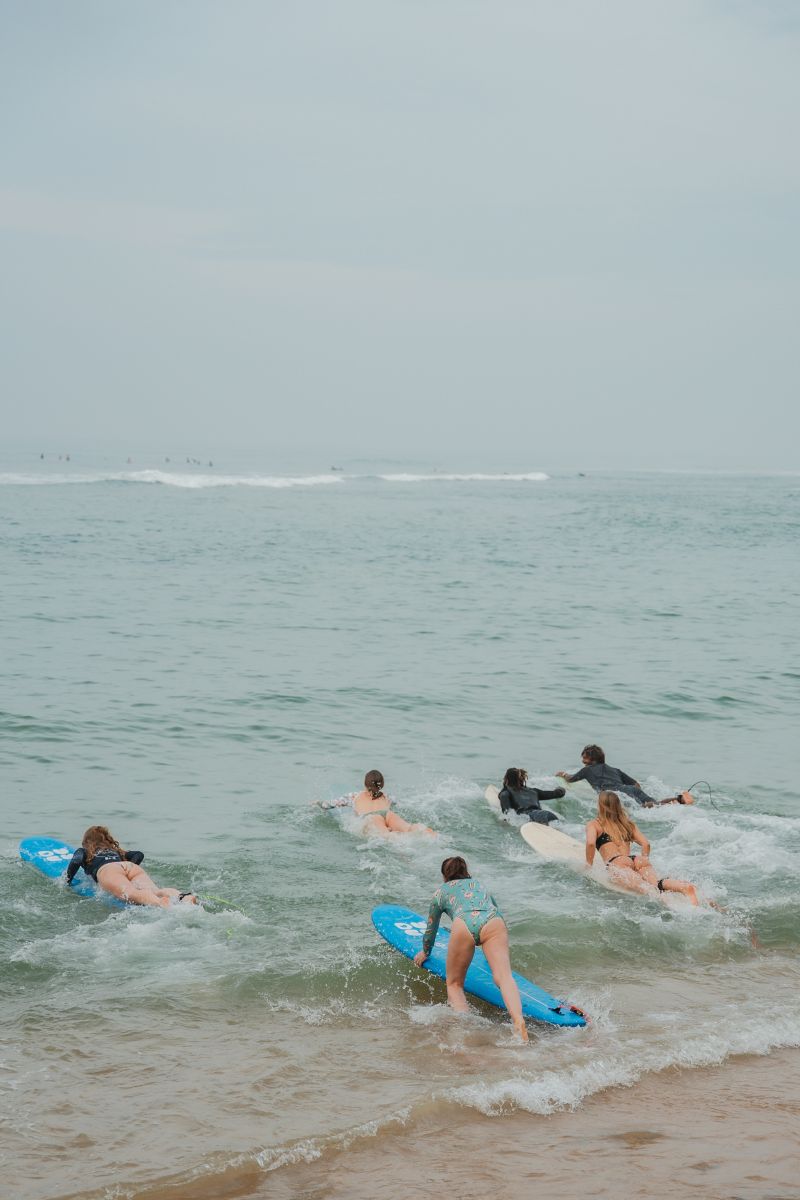
Days one and two. How to handle a board without clattering anyone (or yourself), how to get out through the broken waves, and how the beach and the sea actually work. Then into the whitewater on forgiving waves, lying down at first, learning to steer before you try standing.
You’ll fall off. A lot.
That’s sort of the point. The programme puts play ahead of getting it right, and nobody minds you falling off. The only real requirement is that you can swim.
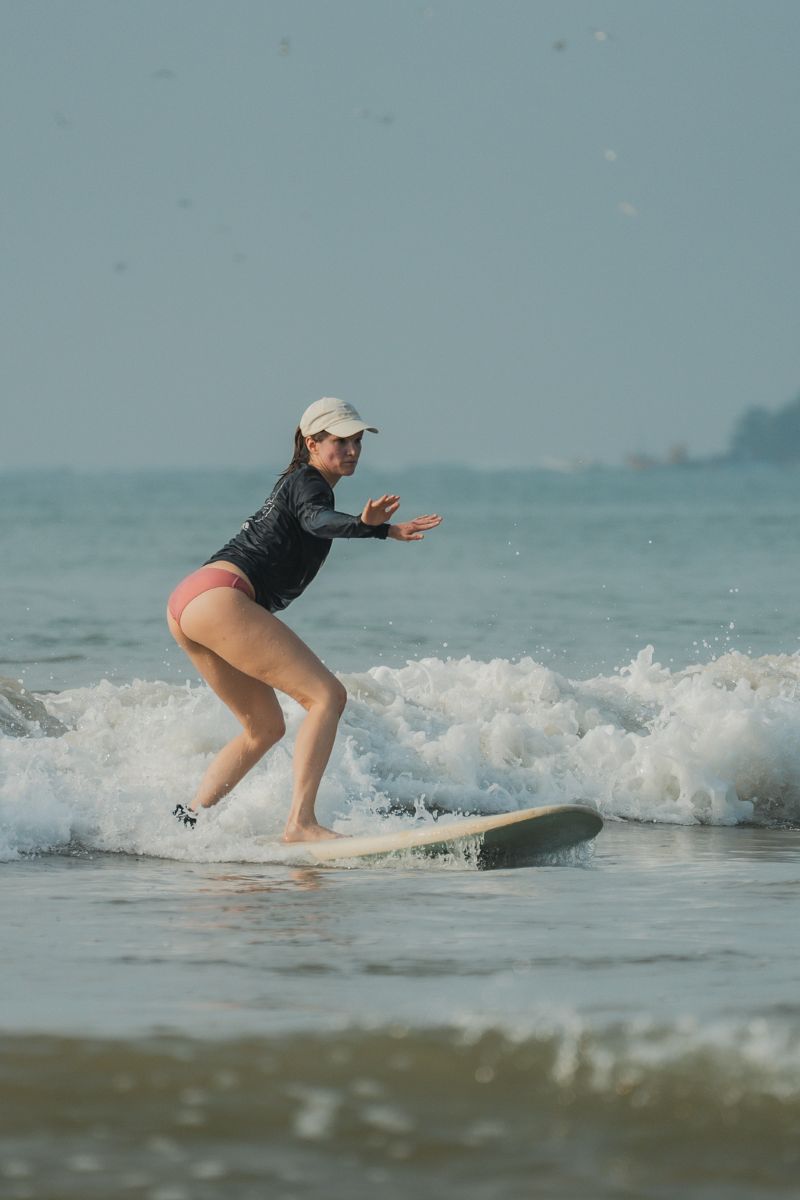
Midweek. Things start to click. You’re getting to your feet, staying there a bit longer and doing it more often. Then come the first proper moves: controlling your speed and turning left and right along the whitewater. This is also when the video analysis comes out - video analysis sounds like something for pros with sponsorship deals, but Soul & Surf, everyone gets it, beginners included.
Emma Boardman, who’d stayed with Soul & Surf in Portugal before coming out to Sri Lanka, rated it the most useful bit of the week: “The fact you do video analysis for everyone here (even beginners) has been so useful! I feel like I know what to focus on and I’ve made little points of progress which I wouldn’t have been able to do without the video analysis.”
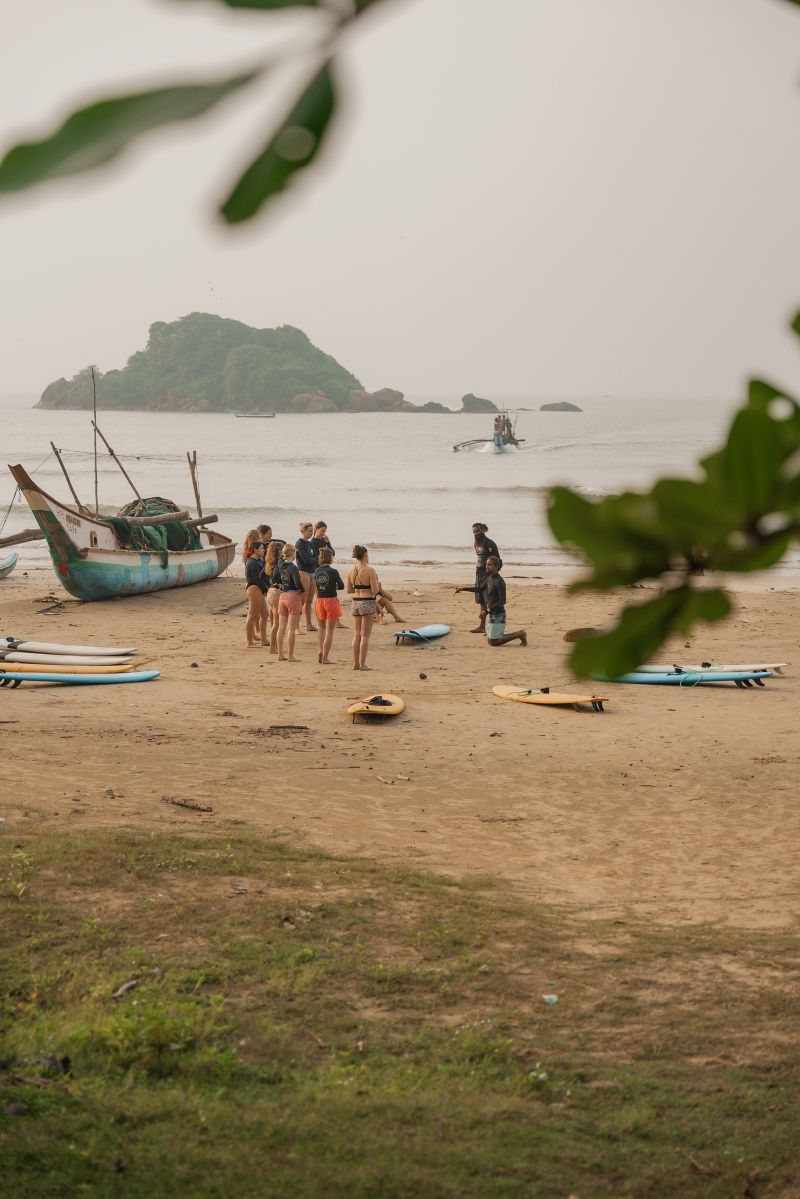
The theory bit. Out of the water, there are surf theory sessions on how waves are made and how swell travels, rips and currents (and what to do if you’re caught in one), onshore versus offshore versus crossshore wind, lefts and rights, and surf etiquette, so you don’t accidentally enrage a local. It’s not homework. It’s the bit that turns “I fell off again” into “ah, that’s why”.
End of the week. You’ll know where to sit, which waves to go for and when to paddle. Joe Pilbeam, a graphic designer from Brighton, came out specifically to learn to surf in Sri Lanka: “The fact that I can surf and do yoga as a total beginner is what I was looking for, but being here has far exceeded my expectations.” Cheers, Joe.
You can hire a board and teach yourself off YouTube. You can also cut your own fringe. Both are technically possible.
A good coach doesn't just scream "paddle!" and hope for the best. They tell you exactly when to paddle, where to sit and when to get up. Grace McKellar had surfed on and off for years ("but not super well and not consistently," her words) before she came to Soul & Surf.
Her verdict on the coaches: "they're so good at reading the waves, and everyone is so patient." She booked a second week before the first was finished. We're taking that as a complement.
And if the sea makes you a bit nervous, that's fine too. Kate Connelly came to Soul & Surf for her first ever surf: "It was my first time surfing and I felt so safe the whole time."
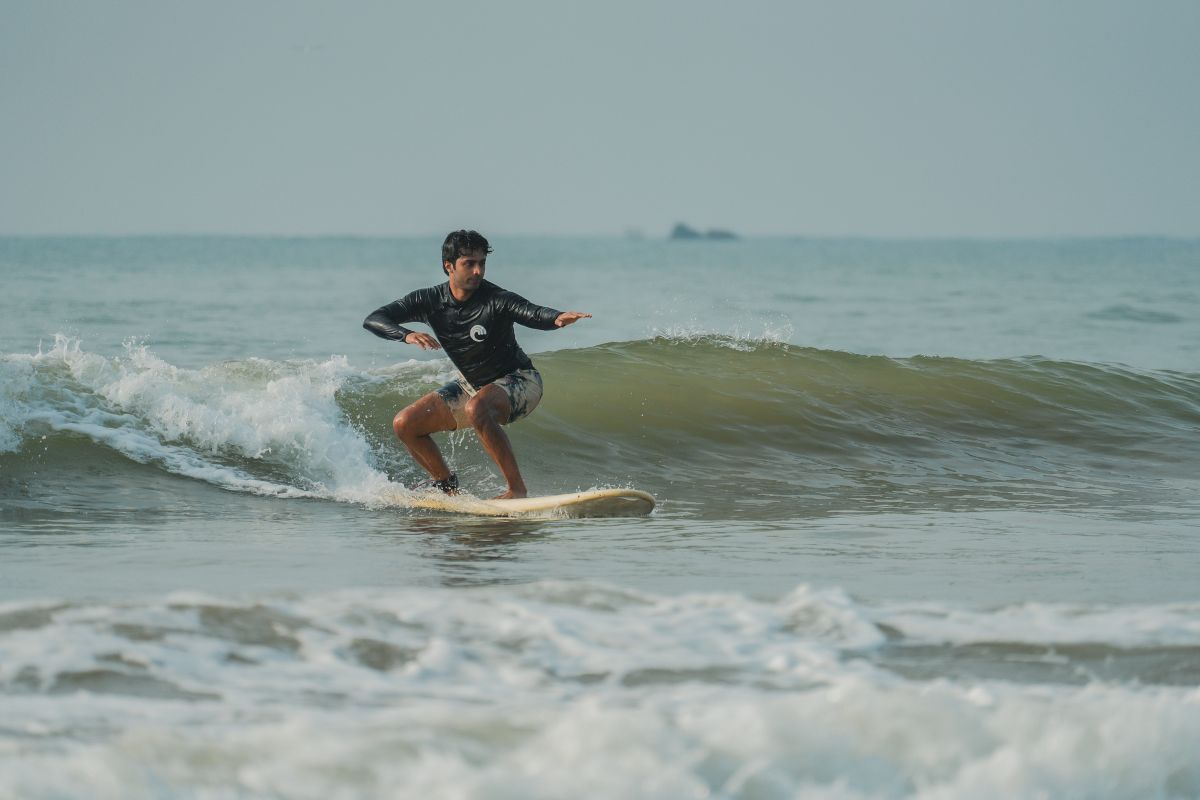
POV: Riding your first wave on Sri Lanka’s south coast
‘Surf camp’ can mean anything from a questionable fella with a pile of snapped boards under a palm tree to a full-on surf retreat. Before you book, ask:
At Soul & Surf in Ahangama, lessons include boards, transport to the beach, a theory session on land and warm-ups, with small-group coaching and video analysis. Out of the water it's yoga, workshops, guided afternoon surf sessions and a lot of very good food.
Where is the best place to learn to surf in Sri Lanka?
The south coast is the best area for beginners in Sri Lanka, particularly around Ahangama and Weligama, where gentle beach and reef breaks sit alongside plenty of surf schools. Soul & Surf runs its surf lessons and surf and yoga retreat from Ahangama, roughly three hours' drive from Colombo's international airport.
How long does it take to learn to surf?
Most beginners can stand up on white water waves within their first session or two. Catching unbroken green waves consistently takes longer, often a few weeks of regular surfing. A week of coaching at Soul & Surf gives you the foundations to keep going, and have the confidence to go it alone.
When is the best time to learn to surf in Sri Lanka?
The south coast of Sri Lanka is at its best from around November to April. Outside those months, the coaches at Soul & Surf in Ahangama find suitable beginner waves by picking more sheltered spots.
Do I need to be able to swim?
Yes. You don't need to be quick, but you should be a confident swimmer and comfortable in the sea.
Have a look at surf lessons in Ahangama or the full Soul & Surf Sri Lanka retreat. Bring sun cream and a sense of humour. Leave your dignity at home, you won't need it.