


Whether you're answering emails from a cafe in Portugal, a hammock in Sri Lanka or - if you're Anita - the boot of a hatchback, working from anywhere is equal parts freedom and organised chaos. Here's how to do it well, avoid the common pitfalls, and create a life where work fits around the things that matter.
Rachel Lingham | 10th July 2026
Taking 'remote work' quite literally.
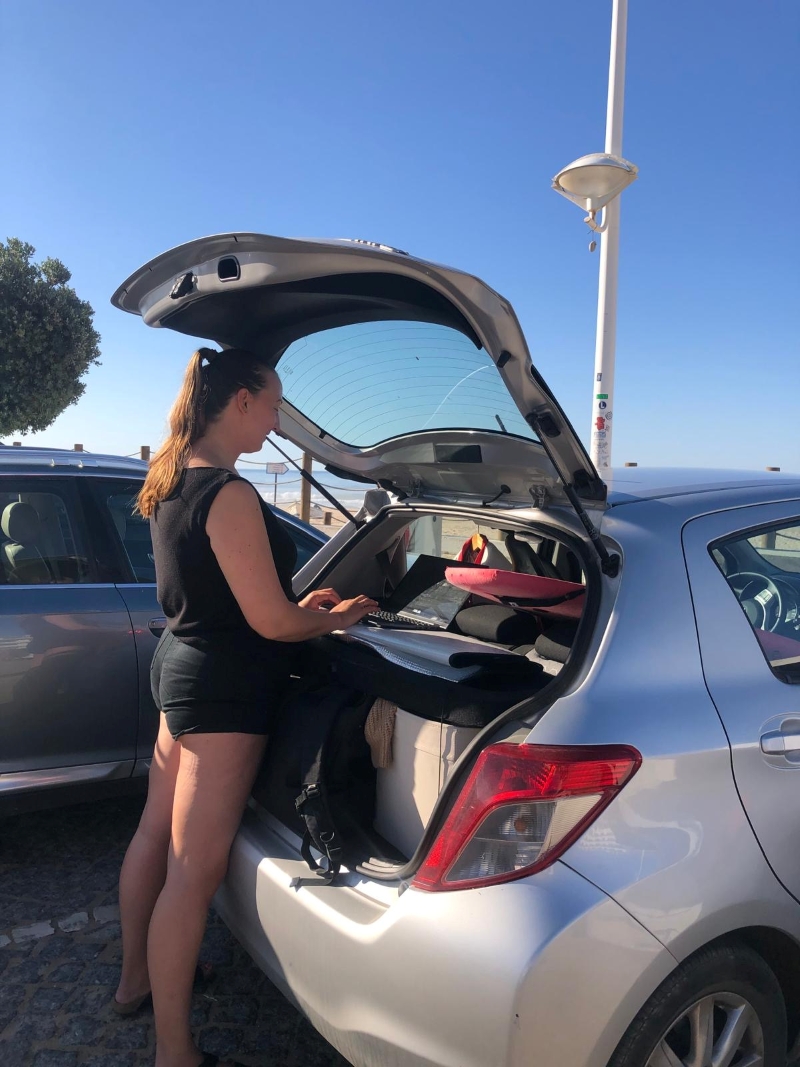
There are few sights more peculiar than a grown adult perched in the boot of a car answering emails.
Yet here we are.
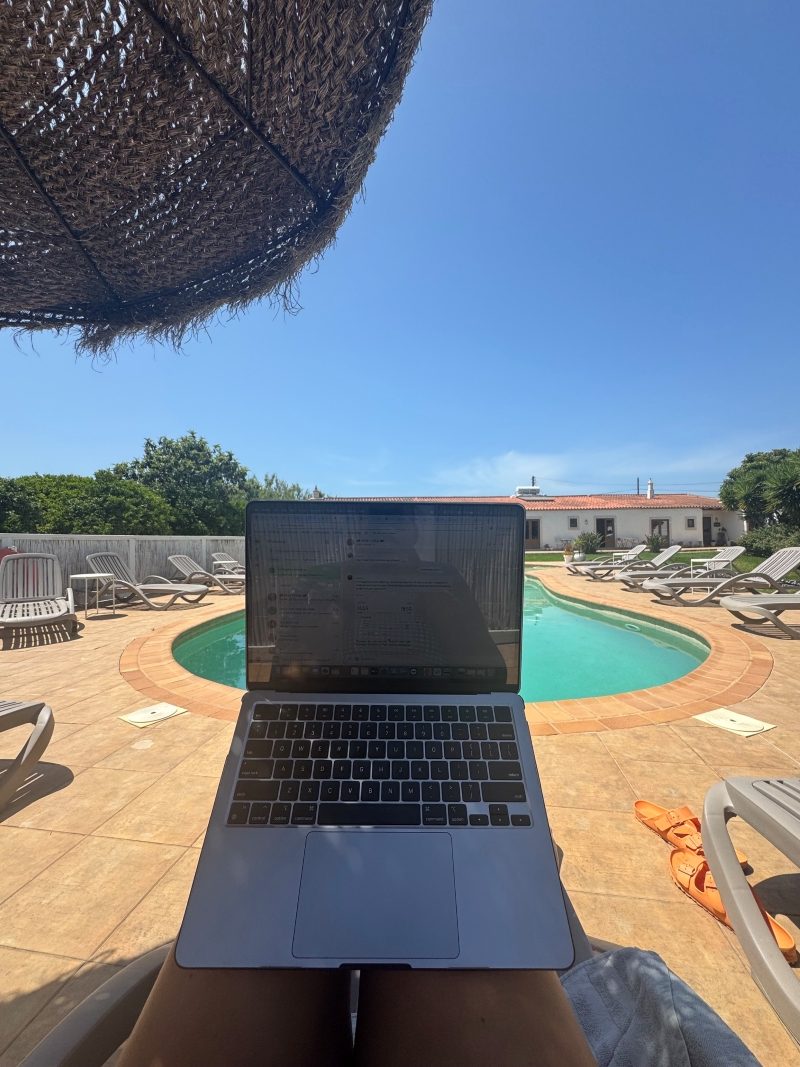
The modern workforce has achieved something previous generations could scarcely imagine. Thanks to laptops, wifi and a collective refusal to spend our best years staring at acoustic ceiling tiles, work can now happen almost anywhere. A beach in Indo. A cafe in the Algarve. A hammock in Sri Lanka.
A hair salon, apparently.
Nobody seems entirely sure how this happened. One minute remote work meant sitting at your kitchen table while pretending not to notice the washing up piling steadily higher in the background. The next involved conducting strategy meetings from a beach cafe while nursing a fourth coffee to justify your continued occupation of the table.
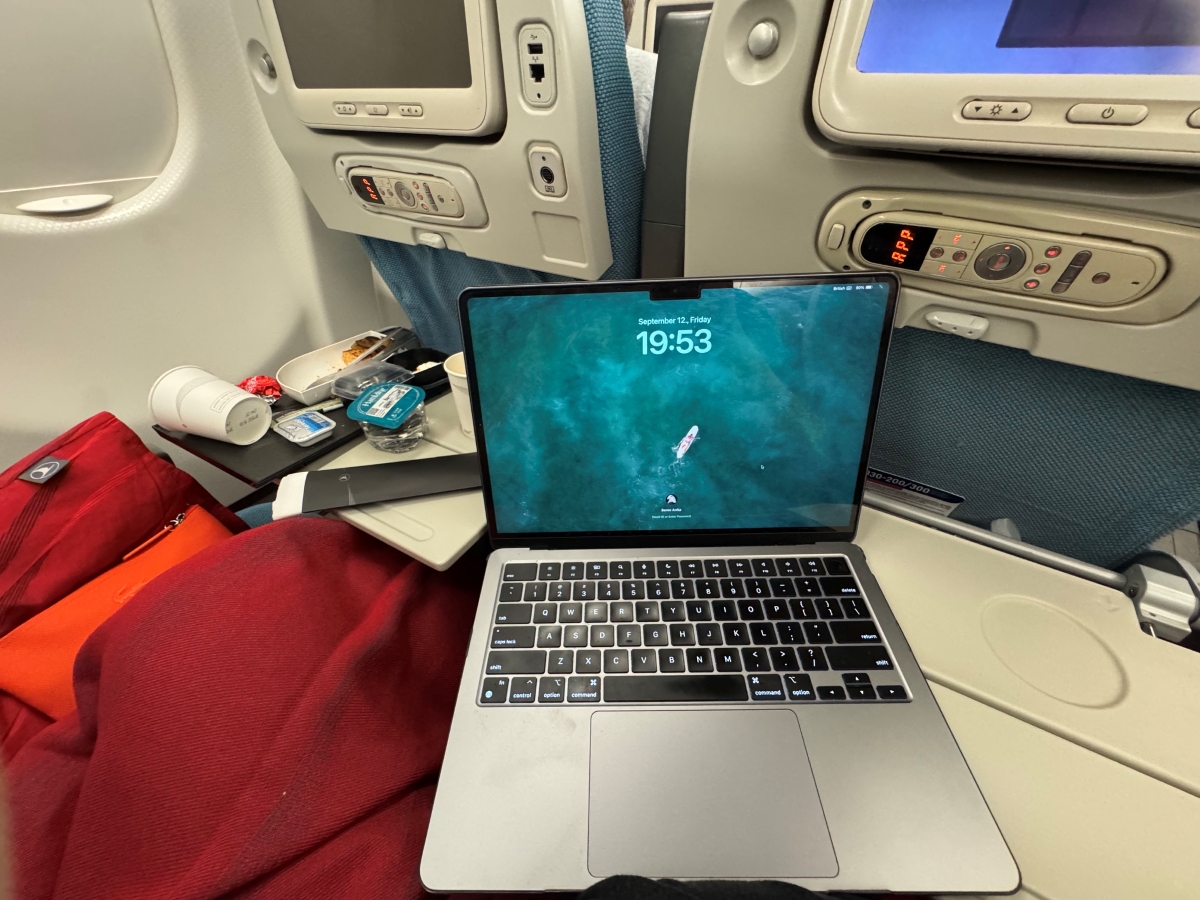
At Soul & Surf, we’ve seen guests join calls from terraces overlooking the ocean, finish presentations between surf sessions and clear their inbox while sitting in a hammock. We’ve also seen our staff (big up Anita) working from beaches, pool sides, cafés, airport floors and, on one memorable occasion, a car boot. The photos don’t make LinkedIn, but they probably should.
The thing is, working from anywhere isn’t really about escaping work. It’s about escaping everything that has attached itself to work. The traffic. The rushed lunches. The endless cycle of home, office, supermarket, repeat. It’s about creating enough space in your life that work becomes one part of the day rather than the thing around which everything else revolves.
For years, the goal seemed fairly straightforward. Work hard enough and eventually life would begin. Maybe at the weekend. At the pub. Maybe during your annual holiday. Maybe when you retired and finally had time to enjoy yourself.
Remote work has quietly challenged that idea.
Most people aren’t moving to surf towns because they’re desperate to answer emails from a different postcode. They’re looking for something older and simpler than that. More time outside. More movement. More connection. A morning surf before work. Lunch in the sunshine. A life where the best part of the day isn’t squeezed into the gap between dinner and bedtime.
Tim Ferriss famously built an empire around the idea of escaping the nine-to-five, but perhaps the real lesson wasn’t about working less. It was about having more choice. The ability to decide what a good day looks like, and then organising your work around it.
Thinking of working remotely for a little while?
Our Green Season long-stay rates in Sri Lanka start from £45 per night (room only). Trade your desk for an ocean front.
One of the biggest mistakes people make when they first start working remotely is treating every day like a holiday. It's understandable. If you're staying somewhere beautiful, why wouldn't you spend all day exploring?
The problem is that work has an annoying habit of continuing to exist.
The people who make this lifestyle work long term tend to do something surprisingly simple. They create a rhythm. They schedule focused work blocks and then close the computer when they're done.
Rather than squeezing life around work, they squeeze work around life.
For our staff at Soul & Surf, for example, that often looks like an early surf, productive hours with a laptop, lunch with guests and an after-work yoga class. It's not rocket science, but it is a much healthier order of operations.
There's a tendency to dismiss location as superficial. Happiness comes from within, we're told. A change of scenery won't solve all your problems.
Fair point.
But it would also be difficult to argue that environment doesn't matter at all.
Spend enough time in a town where you're constantly rushing, commuting and staring at screens, and it starts to shape how you feel. Spend enough time somewhere with access to nature, sunshine, good food and a community of people who value balance, and that starts shaping you too.
The travel writer Eric Weiner built an entire book around this idea (The Geography of Bliss). Different places encourage different ways of living. None of them are perfect, but some environments make it easier to prioritise the things that keep us healthy and happy.
A surf town won't solve your problems. You'll still have deadlines. You'll still have bad days. You'll still occasionally spend twenty minutes looking for a charger you definitely, 100% put in your bag yesterday.
But there are certainly worse places to deal with life's inevitable chaos than somewhere you can walk into the ocean before breakfast.
Instagram would have you believe that all remote workers spend their days typing from hammocks suspended above turquoise water. This is nonsense.
Anyone who has tried to join a video call from a hammock knows that it is a fabric-based obstacle course. Also there is no quicker way of alienating everyone else on the call.
The truth is that working from anywhere doesn't mean working from everywhere. Some places are great for relaxing and terrible for concentrating. Others are surprisingly perfect.
The goal is to find somewhere comfortable, somewhere reliable and somewhere with enough bandwidth to survive a Zoom or, god-forbid, a Teams (vomits in mouth) call.
A good cafe, a quiet terrace, a coworking space or even a shaded picnic table overlooking the sea can all work beautifully. The key is consistency and preparation. Spending half your day hunting for wifi is neither romantic nor adventurous. It's just annoying.
Interestingly, the places that consistently top lists of remote-working destinations aren't necessarily major cities. Places like the Algarve, Montenegro, Bali, Chiang Mai, Da Nang and parts of Sri Lanka have become popular because they offer a combination of decent infrastructure, strong communities, affordable living and easy access to nature. The common thread isn't technology. It's quality of life.
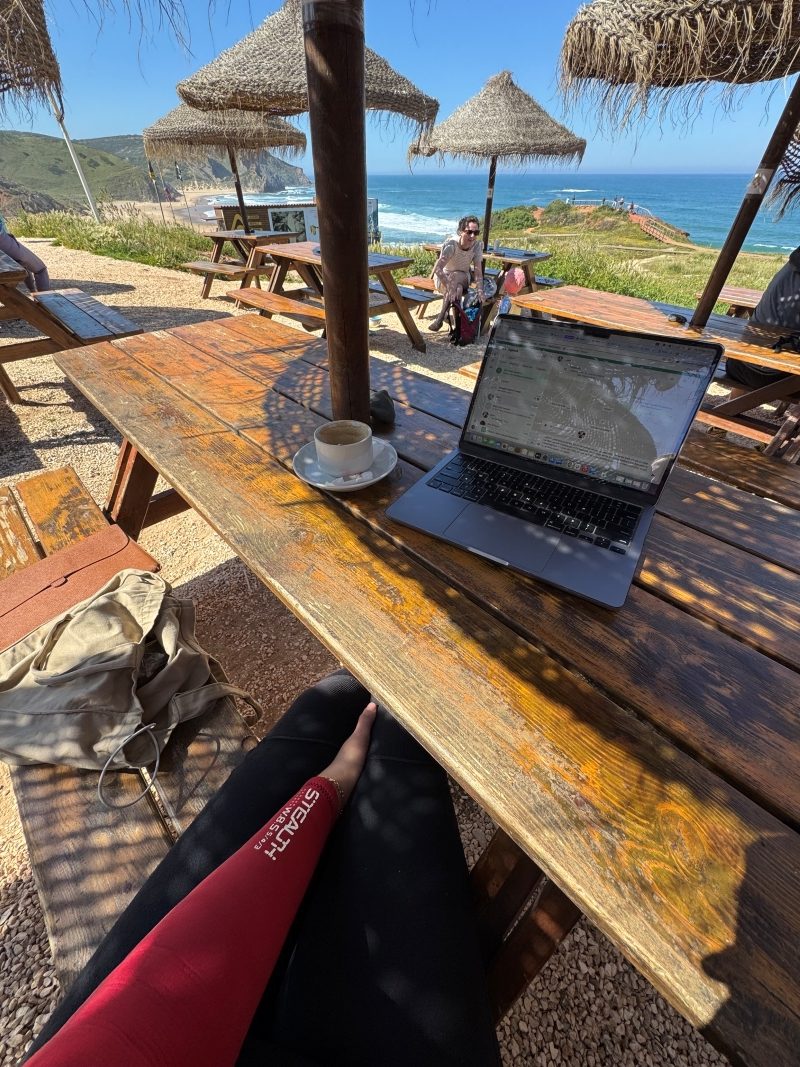
Replacing a cubicle with ocean views
One of the strangest things about remote work is how quickly people convince themselves they need an entire mobile command centre.
Extra screens. Portable keyboards. Ring lights.
Meanwhile, some of the most successful remote workers operate perfectly well with a laptop and a charger. A battery pack is useful, and a local or e-sim can be a lifesaver in places where power cuts occasionally make an appearance. Beyond that, most people need far less than they think.
The less stuff you carry, the easier it becomes to move around and adapt. A simple setup means less time faffing and more time doing the things you travelled for in the first place.
Besides, there's something deeply satisfying about knowing your office fits into a backpack.
This is arguably the most important skill of all.
When your office is always with you, work has a habit of expanding into every available moment. One more email becomes another half hour. A quick check of Slack becomes an entire evening.
Before you know it, you've travelled halfway around the world only to spend sunset answering messages that could probably have waited until tomorrow. Schedule-send that email for the next morning - your colleagues will thank you for it, and there is no chance of a gut-wrenching 10pm reply.
The art of working from anywhere isn't about becoming more productive. It's about becoming more intentional.
Close the laptop.
Go for a surf.
Take a yoga class.
Watch the sunset.
Have dinner with people.
The emails will still be there in the morning.
One thing that rarely gets mentioned in articles about remote work is how lonely it can be. Working from beautiful places sounds wonderful until you realise you've spent three days talking exclusively to your laptop.
This is one of the reasons retreats work so well. They provide structure, but they also provide people. You can spend the morning focused on work and the afternoon sharing waves, meals and stories with people from all over the world.
Some of the best conversations happen after the laptop has been shut. Around a dinner table. On a beach after a surf. During a yoga class where everyone is discovering new muscles they didn't know existed.
Those moments matter as much as the work itself.
Work remotely. Surf daily. Stay longer.
Our Green Season long-stay rates start from £45 per night (room only), making it easier to turn a working week into a month by the ocean.
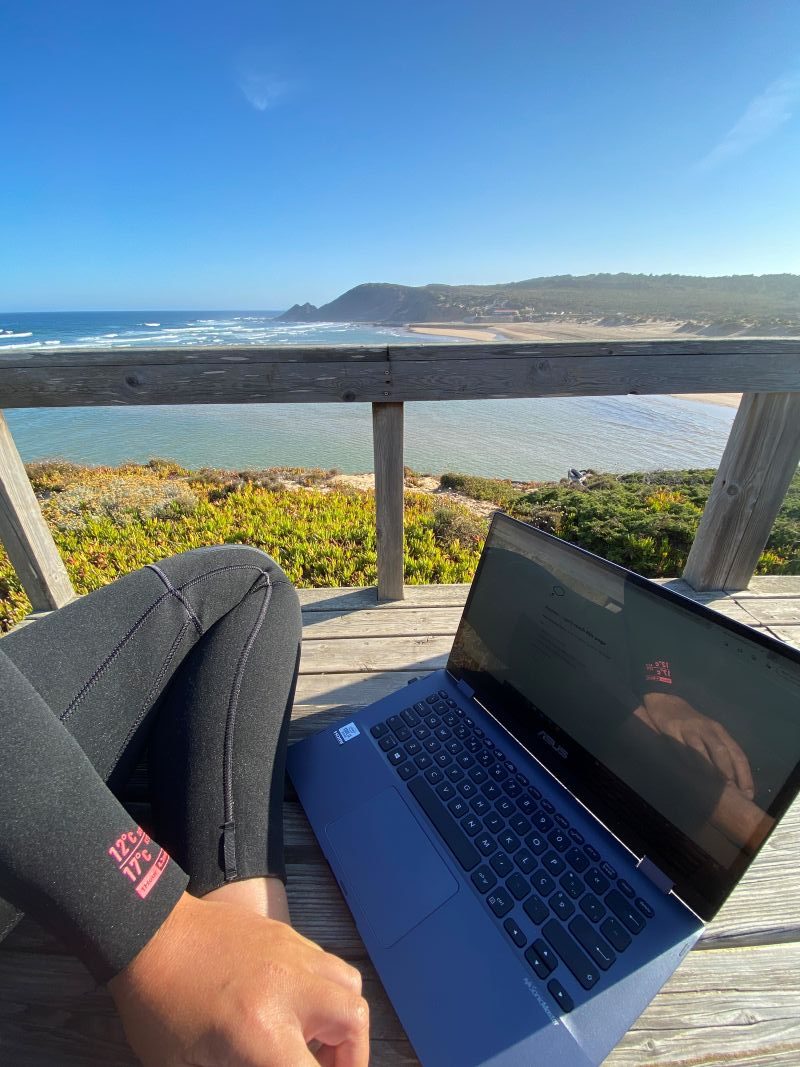
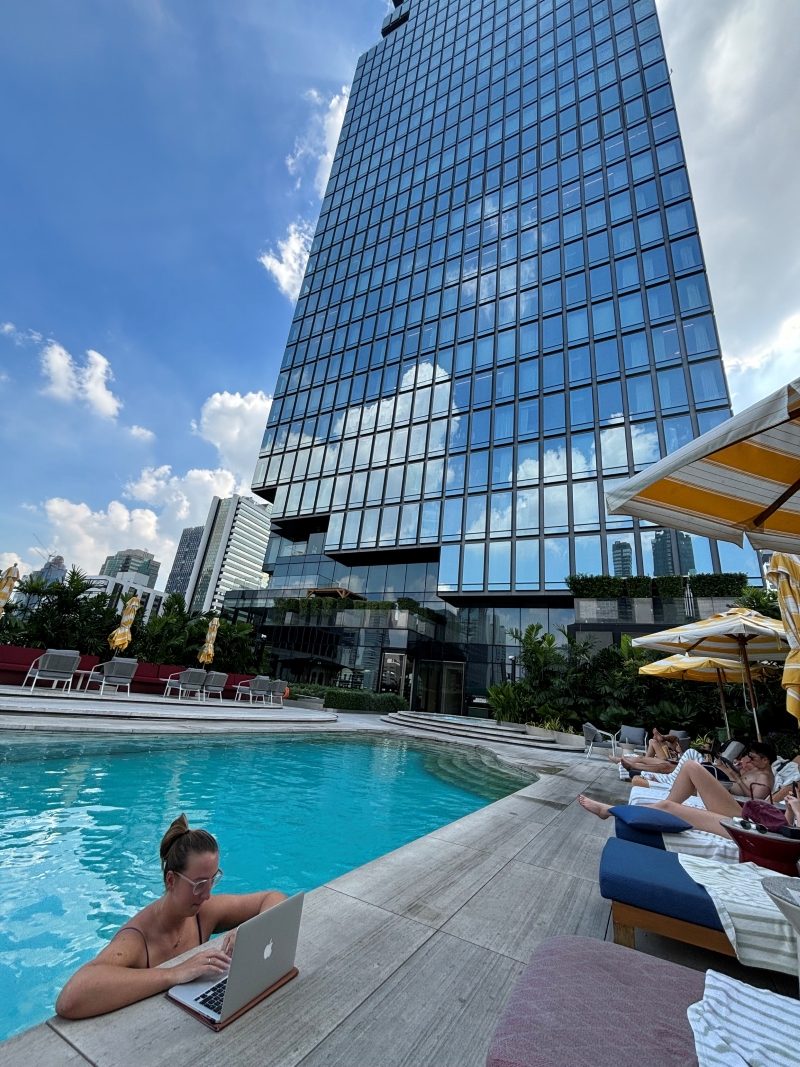
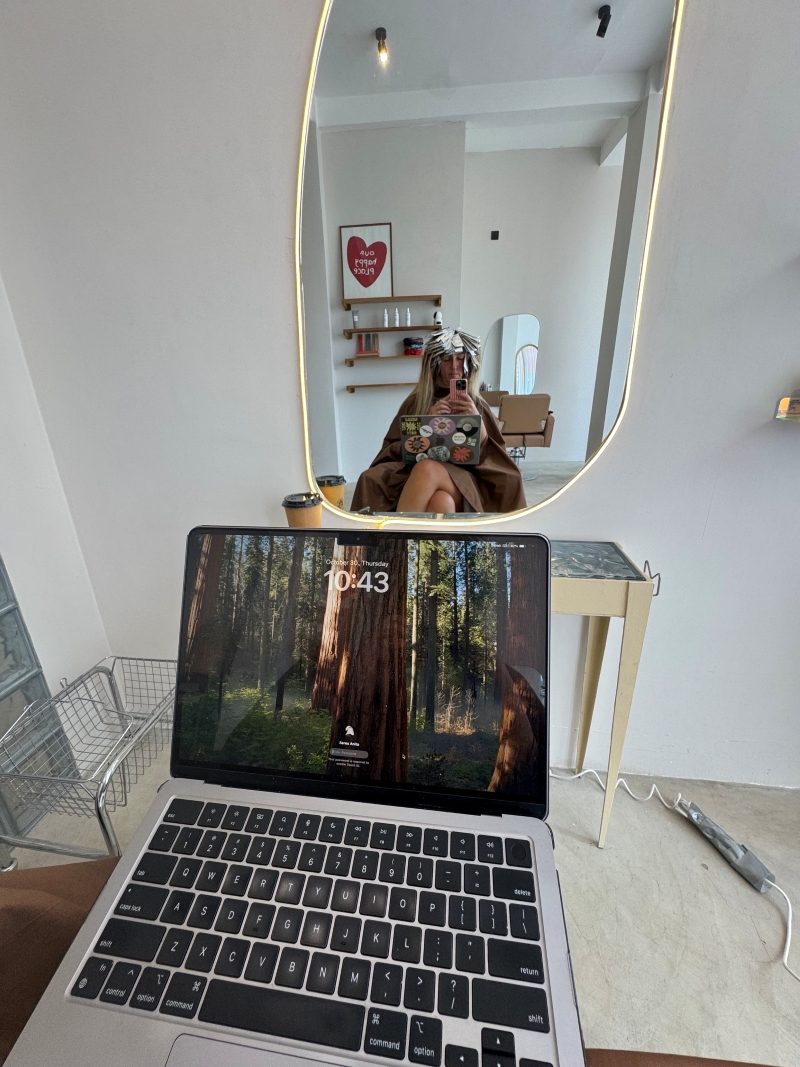
The art of working from anywhere
Remote work isn't universally positive.
The same forces that have allowed people to live more flexibly have also changed communities around the world, sometimes in ways that aren't always helpful.
Anyone who has spent time in Lisbon, Bali, Mexico City or parts of coastal Portugal has seen versions of the same story unfold. More visitors arrive. New businesses open. Investment follows. Then rents start rising and local people find themselves struggling to afford the very neighbourhoods they've called home for years. The local people that have made it into the place you want to visit.
The causes are complex and it's far too simplistic to blame remote workers alone. Housing policy, tourism, short-term rentals and local government decisions all play a role. But pretending our choices have no impact isn't particularly honest either.
If you're lucky enough to work remotely, it's worth thinking about what kind of guest you want to be. Support local businesses. Learn a few words of the language. Stay longer rather than racing through destinations collecting Instagram content. Spend money in places owned by local people. Treat communities as real places where people live, work and raise families, not simply as the backdrop to your lifestyle.
The best remote workers don't just take from a place.
They contribute to it.
Perhaps the biggest lesson from working remotely isn't that you can answer emails from a beach. It's that life feels different when you create space for things beyond work.
A surf before breakfast changes the tone of a day. So does yoga. So does spending time outside, eating good food and connecting with other people.
Working from anywhere isn't really about geography.
It's about perspective.
It's about remembering that work is important, but it isn't everything.
And if that occasionally means updating a spreadsheet from a salon, a hammock or the boot of a hatchback overlooking the ocean, then so be it.
Ready to work from somewhere different?
Whether you're escaping your home office for a few weeks or embracing the digital nomad lifestyle, our Green Season long-stay rates in Sri Lanka start from £45 per night (room only). Just bring your laptop, we'll take care of the rest.
See long-stay rates → here
Remote working reaching new heights