


Now four years later, we sit down together at Soul & Surf Sri Lanka to talk about how it all began, what the ocean means to her, and what “soul” looks like when you’ve seen the edges of the world.
Words by Indie | 17th February '26
There’s a certain kind of calm that comes from people who have spent a lot of time at sea. A groundedness. A rhythm. Indie carries that quietly; shaped by oceans, long passages and places most of us only imagine.
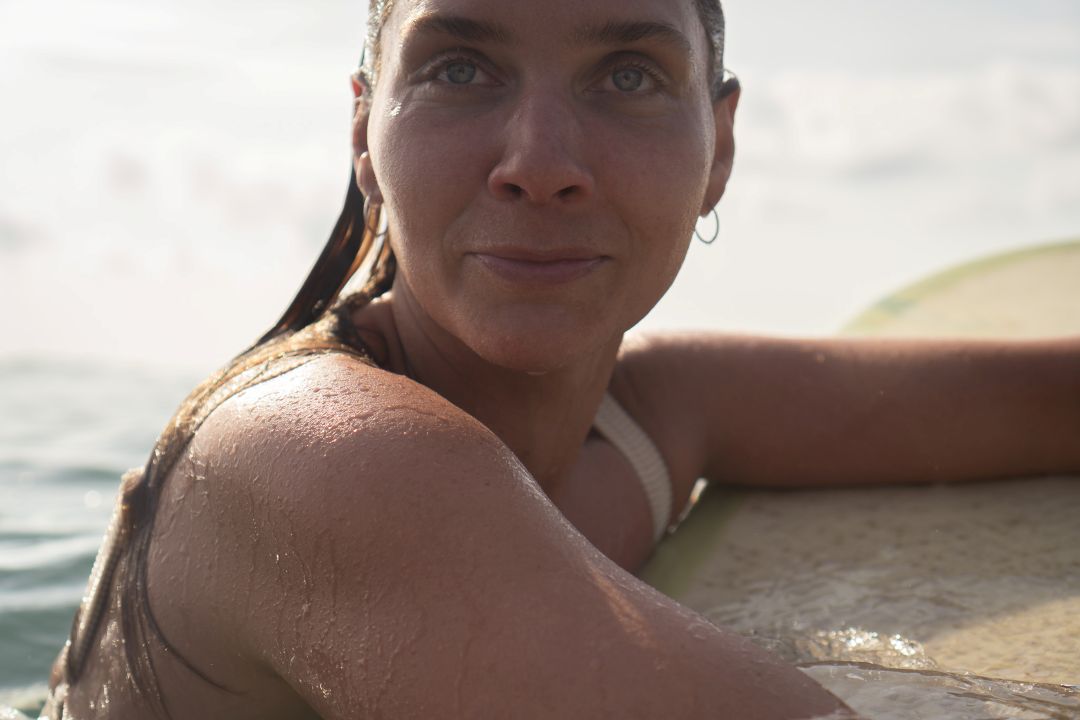
Indie Sage
Originally from the UK, Indie’s journey has taken her from interior design studios to off-the-beaten-track coastlines. From working at sea in remote Australia to crossing the Atlantic, travelling through the Arctic Circle and most recently, to Antarctica with the British Antarctic Survey – her story is one of curiosity, chance encounters and a deep connection to the ocean.
Indie became a part of the Soul & Surf family in 2021, whilst volunteering in the Portugal location; now four years later, we sit down together at Soul & Surf Sri Lanka to talk about how it all began, what the ocean means to her, and what “soul” looks like when you’ve seen the edges of the world.
Originally, I’m from the UK, a small countryside village called Ripley, between London and Brighton. Though “home” has become quite a fluid concept over the years.
That’s always a good question and one I don’t always know how to answer neatly. For the last few years I’ve worked away at sea, both on the bridge and in the galley. I originally trained as an interior designer and have also worked as a chef. From time to time I also find myself within the set design team for TV commercials. They might sound unrelated, but they’ve all complemented each other in different ways. However, back in 2008, while living in Australia, I got my first real taste of working on the water and that planted a seed that never really left me.
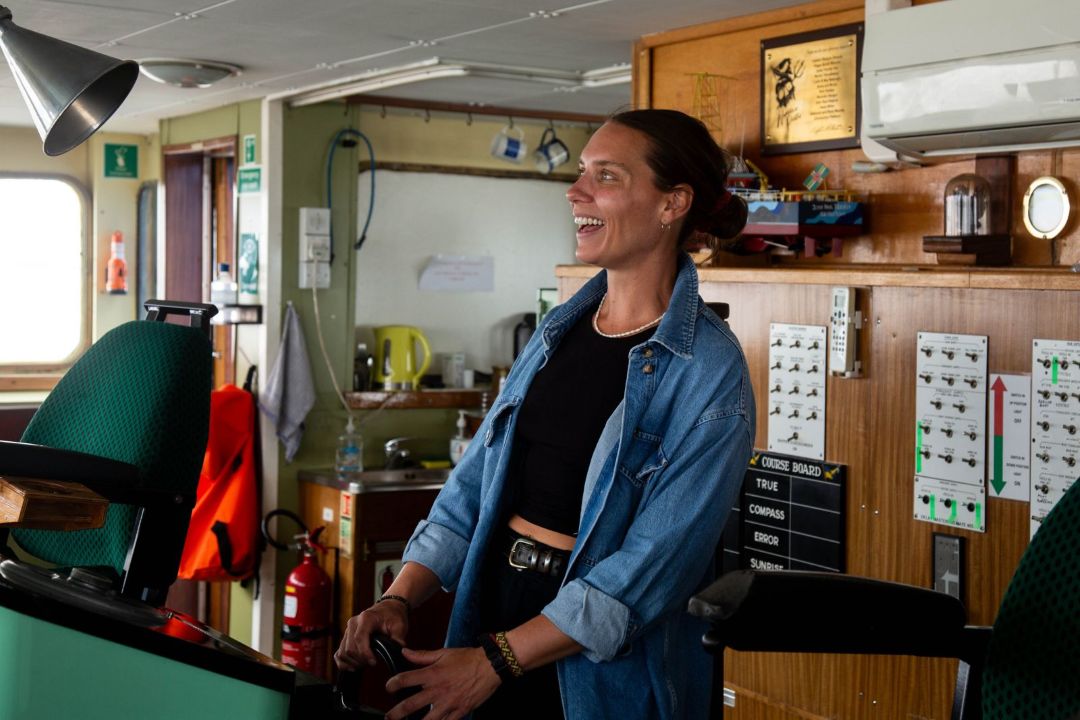
Aboard the Sir David Attenborough polar research vessel
It happened almost entirely by chance.I was travelling with a group of friends in remote Western Australia and on a whim, a friend and I walked into a tour office offering charters to the Horizontal Waterfalls. Chancing the question if they had any jobs going, I was prompted to show my hands… “can you chop a tomato and make a bed?”…The next thing we know, we are being collected in the middle of the night, flown by seaplane across the Buccaneer Archipelago and being dropped on to a catamaran in Talbot Bay. We had no idea where we were going or what we were doing. We spent the rest of the season living and working there, with crocodiles and sharks quite literally in the back garden. That was where it all began.
That early experience stayed with me. After returning to the UK and running my own interior design business for a number of years, I was ready to get back out to sea. A marine conservation organisation approached me and I spent two and a half years working with them on multiple campaigns. During this time we made Atlantic crossings, sailed the polar waters of Greenland and crossed the Arctic Circle, all under the mission of defending and protecting our seas, oceans and their inhabitants.
Since then, I’ve worked on both charter and private yachts around the Mediterranean, Canary Islands and west coast of Scotland. Most recently, I was fortunate enough to travel to Antarctica aboard the Sir David Attenborough polar research vessel and I’ll be heading back again very soon.
It’s summer there at the moment, which means the sun never really sets. That alone is surreal. When we first arrived, it felt like landing on another planet. Unlike the Arctic, Antarctica isn’t inhabited. There are no villages or towns; it’s vast, remote, and incredibly still. Our mission was to deploy teams and supplies to research stations and we were lucky enough to spend some time ashore exploring the landscapes around us.
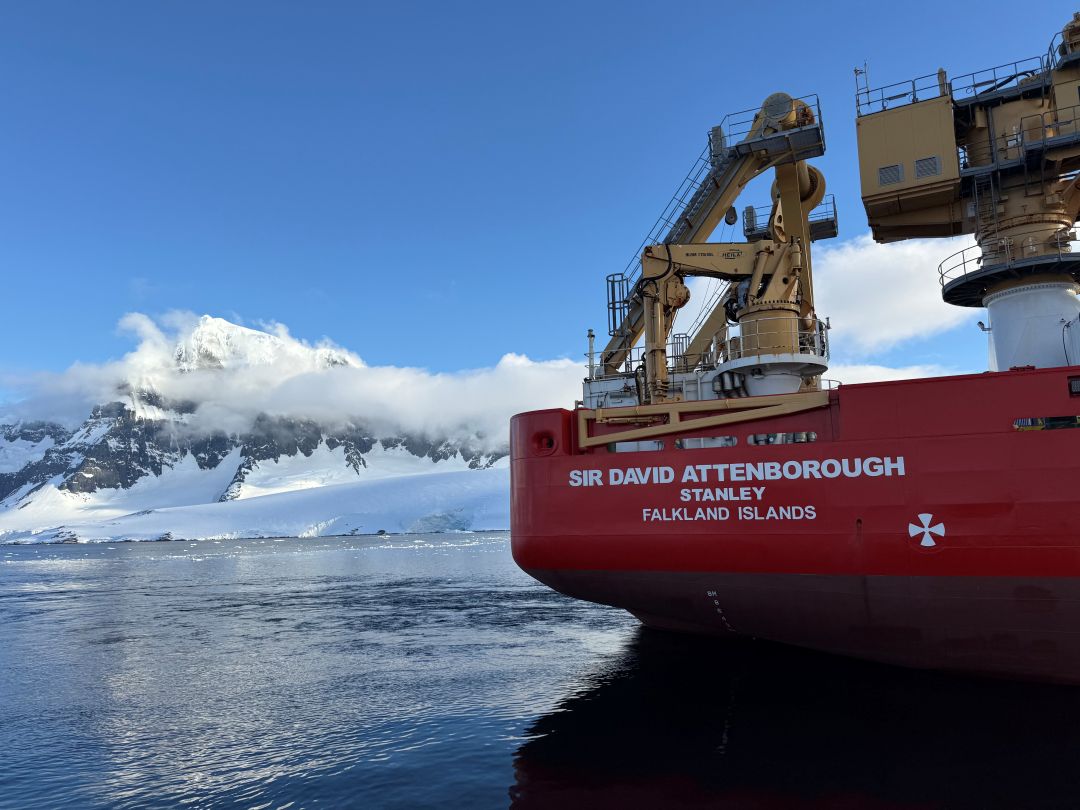
The Sir David Attenborough at Rothera Research Station.
The beauty, without question.One of the most memorable moments was at Rothera Research Station, climbing up to what they call “the ramp” at midnight to experience the polar sunset. The sun dips below the horizon only briefly, before rising again. Standing there, elevated above the ice and runway, watching the light change was surreal. Add penguins in to the mix, animated, curious, and full of character, it’s something I won’t forget.
People often ask me if I get scared working at sea, especially on long passages where you don’t see land for weeks at a time. But for me, there’s a calmness in it. Looking out at the horizon quiets the mind, closes down the mental chatter. Comparatively to land, where your eyes are constantly taking in movement and detail, the ocean feels expansive and grounding.
I believe it’s our greatest hope and also our greatest responsibility. There’s so much happening beneath the surface: overfishing, bottom trawling, illegal poaching and the destruction of ecosystems. Education is crucial…research, watching documentaries. The knock-on effects of the damage are enormous, and once those systems collapse, there’s no easy way back. Protecting the ocean has to be a priority in every sense.
Back to Antarctica, very soon. It was one of those “right place, right time” moments, and I feel incredibly grateful to be returning.
Depth. Meaning. Connection.
That’s soul to me.
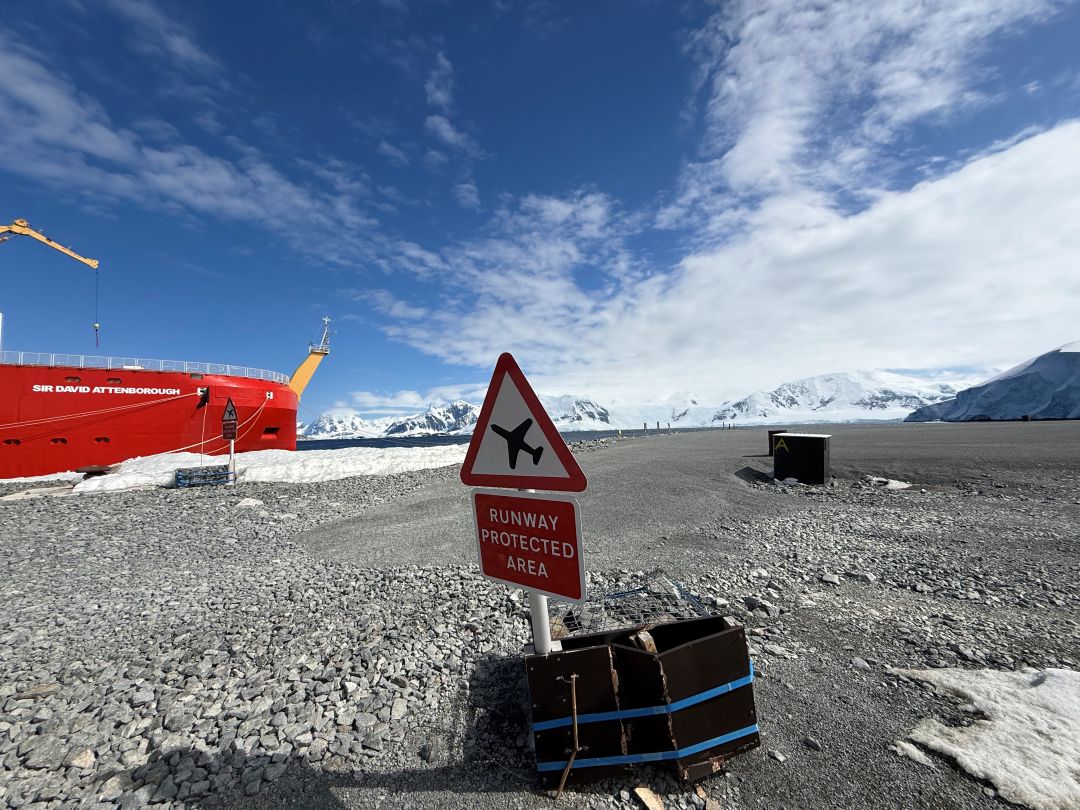
Antarctic summer.