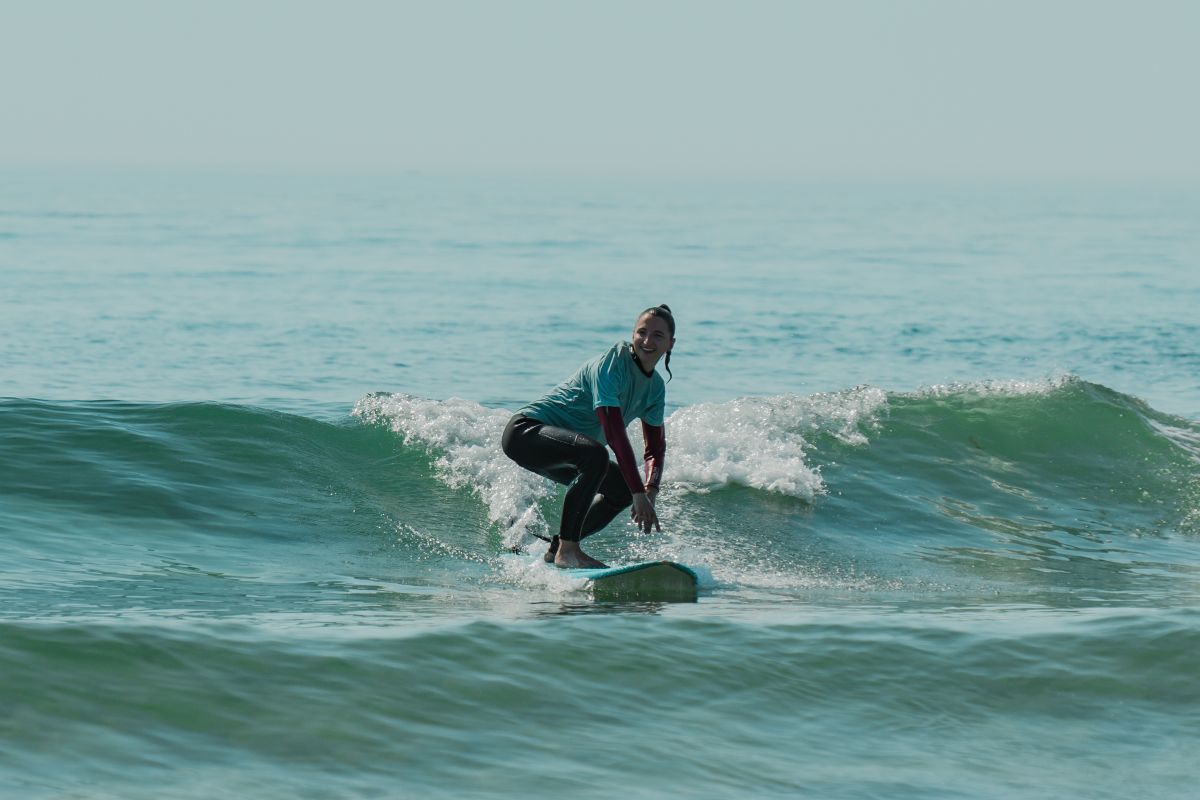



Not all surf camps are the same. Discover where to go, what to expect, and how to choose the right surf camp in Portugal.
30th July 2026
Portugal has more surf camps than it has pastel de nata shops. OK, maybe not. But there are a lot of them. Here’s how to figure out which one is actually right for you.
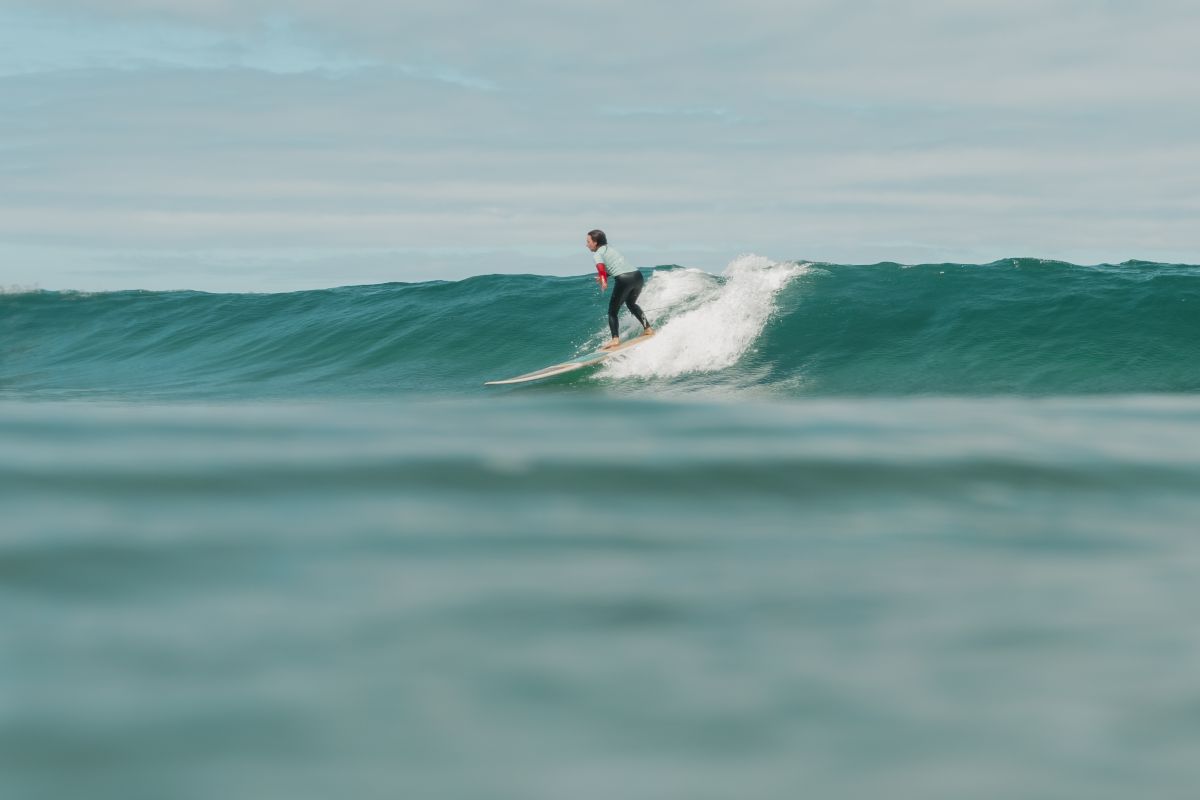
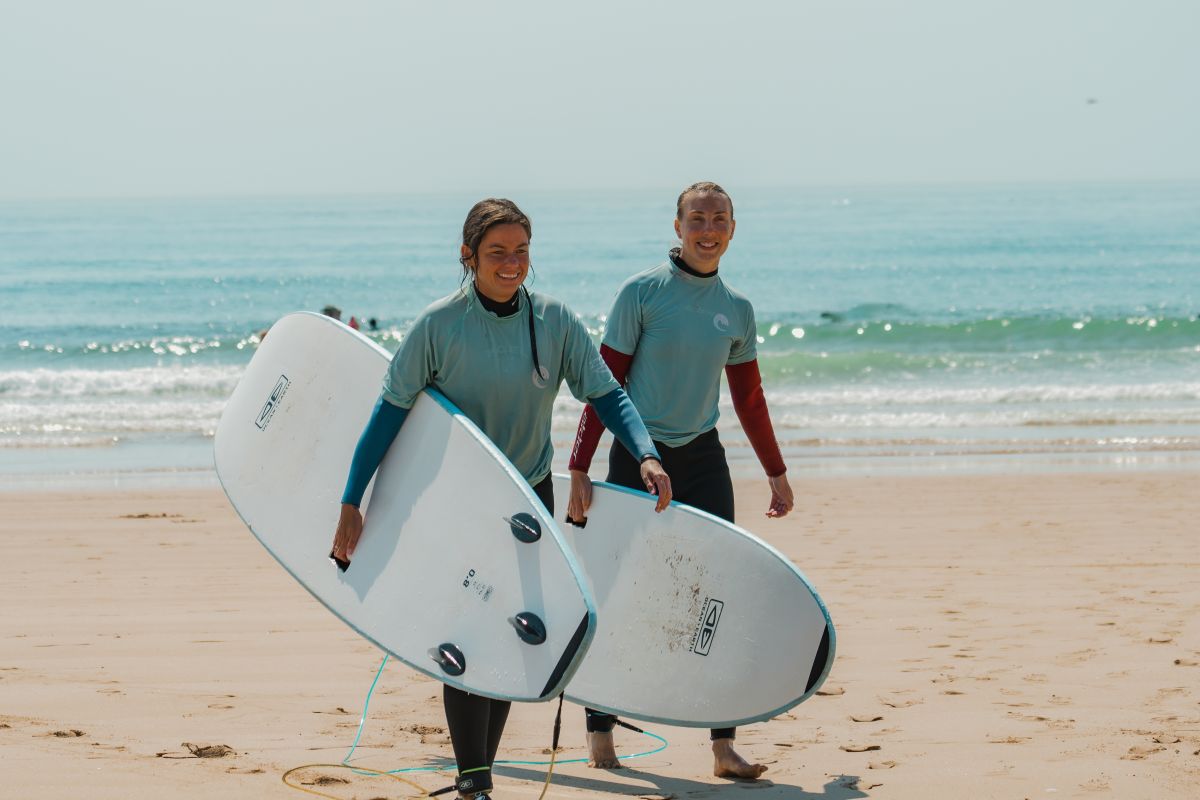
Photo capture by @in.the_.flow_.photography_flora
Portugal has become the surf capital of Europe. It’s not hype. The Atlantic delivers consistent swell to over 950km of coastline, the water stays warm enough for a 4/3mm wetsuit most of the year, and flights from almost anywhere in Europe take two or three hours. Add in affordable food, good wine, and 300 days of sunshine, and you can see why surf camps have been popping up along the coast for decades.
The country has serious surf credentials too. Peniche hosts the WSL Championship Tour. Ericeira holds the only World Surfing Reserve designation in Europe. The Algarve’s southwest coast sits inside the Vicentine Coast Natural Park, where protected coastline meets some of the most dramatic beach breaks on the continent.
But “surf camp” can mean wildly different things depending on who’s running it. Some are basically hostels with a surfboard rack. Others are quiet retreats with yoga, home-cooked meals, and early nights. Getting this wrong means spending a week somewhere that doesn’t suit you. So it’s worth thinking about what you actually want before you book.
Not all surf camps are built the same. Here’s a rough guide.
Dorm beds. Shared bathrooms. A bar downstairs. Surf in the morning, beers by the pool in the afternoon, out in town at night. These are fun if you’re in your early twenties and want to meet people. Less fun if you’re 35 and need eight hours of sleep. Lessons tend to be in bigger groups (8 per instructor), and the focus is more on the social experience than your pop-up technique. Price: usually €350-550 for a week.
A local surf school that bolts on accommodation. You get surf lessons and a place to stay, but they’re often separate. You might be in a rental apartment five minutes away. The teaching is usually solid because surfing is their actual business. You’ll typically get 90-minute group sessions with certified ISA instructors, video analysis of your technique, and sometimes surf theory classes. Price: €450-750 for a week.
Smaller groups. Better food. Nicer rooms. Probably some yoga involved. These places care about the full experience, beyond getting you in the water. You’ll pay more, but you’ll eat well, sleep well, and come home feeling like you actually had a holiday rather than an endurance test. Expect groups of 4-6 per instructor, personalised coaching, and all meals included. Price: €800-1,400+ for a week.
Rent a place on Airbnb, book surf lessons by the day, eat out. Maximum flexibility. But you’re doing all the planning yourself. And if the surf is flat or the wind swings onshore, you won’t have a local team who knows which beach to drive to instead. Budget: varies wildly, but single surf lessons typically run €40-60 per session.
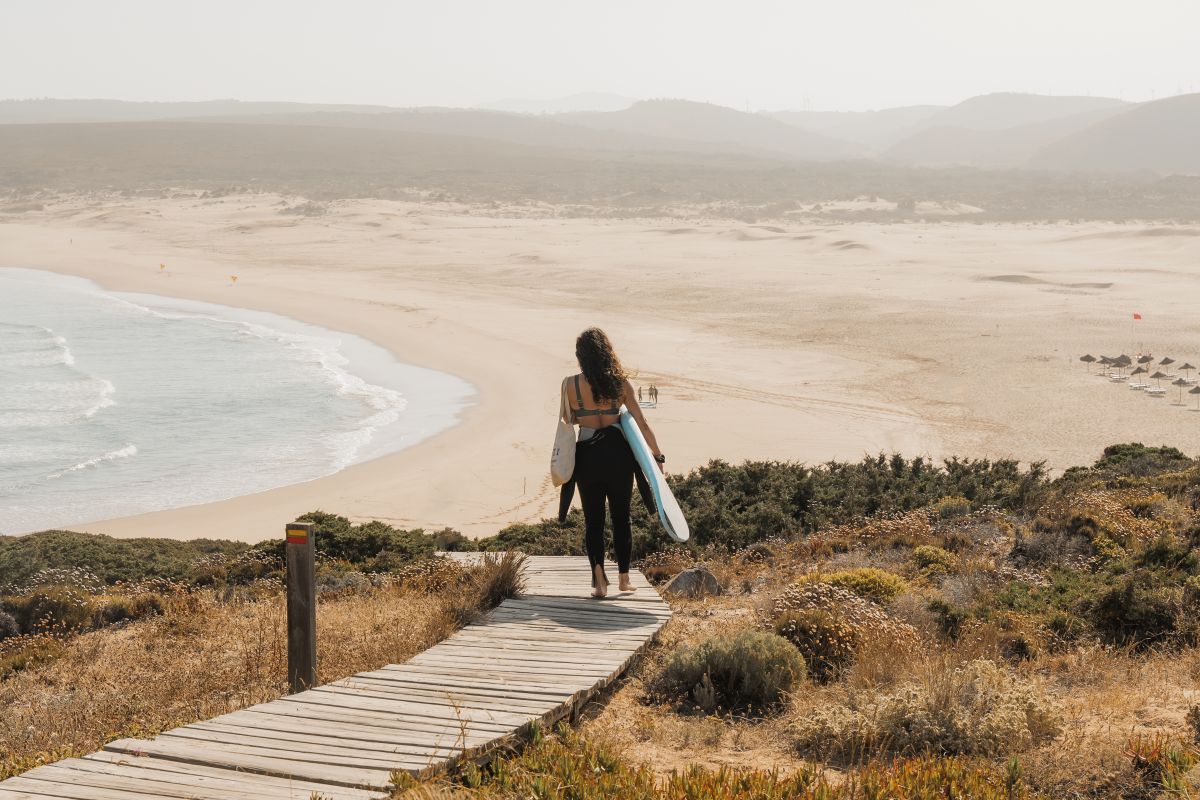
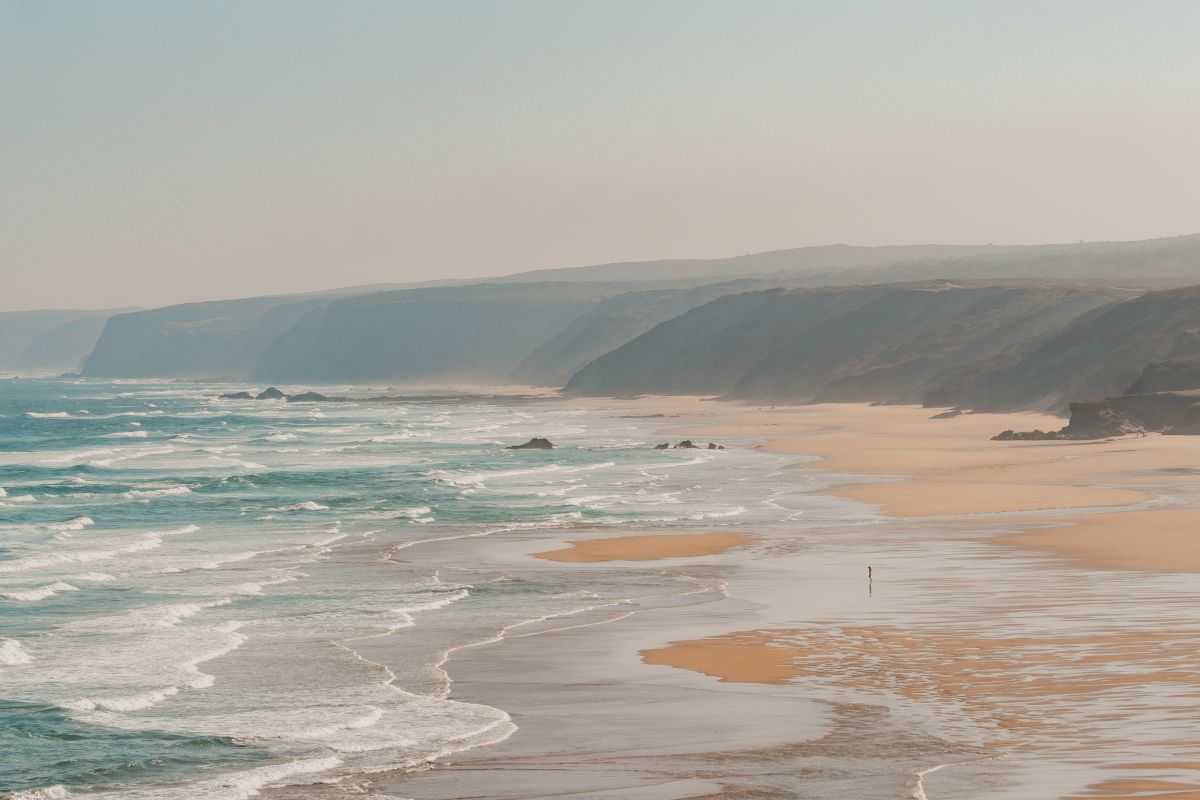
Photo capture by @in.the_.flow_.photography_flora
Portugal’s coastline breaks down into three main surf regions. Each has a different character.
About an hour north of Lisbon. This is where most of the surf world’s attention goes. Peniche hosts the WSL Championship Tour at Supertubos, and Baleal beach is one of the best beginner spots in Europe. The narrow isthmus at Baleal creates sheltered beach breaks where waves reform in waist-deep water over sand. Ericeira, 45 minutes from Lisbon, has reef breaks and beach breaks at spots like Foz do Lizandro and Ribeira d’Ilhas.
For beginners? It can be a mixed bag. The waves can be powerful, the water is noticeably cooler (15-18°C in summer, you’ll want a 3/2mm or even 4/3mm wetsuit), and the popular beaches get crowded in July and August. The towns have good nightlife and plenty of restaurants though.
Best for: Intermediate and advanced surfers. Beginners who want a lively town scene and don’t mind cooler water.
This is our patch. The western Algarve sits where Portugal’s south coast meets its west coast, around the towns of Lagos, Burgau, Luz, and Sagres. That geography is the secret.
Because the coastline faces both south and west, you can nearly always find a beach that’s working. Wind blowing onshore at the west-facing beaches like Amado or Arrifana? Drive 15 minutes to a south-facing spot like Martinhal or Praia da Luz instead. That flexibility matters when you’re learning. There’s nothing worse than a week’s surf camp with three days blown out by onshore winds.
The water is warmer here (19-22°C in summer). You can surf in a 3/2mm wetsuit most of the year, and boardshorts in August. The beaches have sandy bottoms, which is what you want when you’re falling off a surfboard repeatedly. Lagos itself is a proper town with cobbled streets, seafood restaurants, and the kind of crumbling old-town charm that makes you want to extend your trip. Much of the coast sits within the Vicentine Coast Natural Park, so it stays un-spoilt.
Best for: Beginners and intermediates. Couples. Solo travellers. People who want good surf and a good holiday. Anyone who doesn’t want to feel like they’re at a surf boot camp.
Close to the capital. Good for a long weekend if you’re already in Lisbon. Costa da Caparica has 30km of sandy beach breaks that work in summer. But the beaches are urban, often crowded, and the waves are less consistent than further north or south. Not really worth a dedicated surf trip unless you want city access.
Best for: Long weekenders or surfers who want Lisbon nightlife on tap.
A decent surf camp should give you more than a board and a beach. Here’s what to look for:
Surf lessons with qualified instructors. Check the instructor-to-student ratio. More than 8 per instructor and you won’t get personal attention. The best camps keep groups to 4-6. Look for coaches with a recognised qualification - ASI, ISA, or the national sports body wherever you're surfing (IPDJ in Portugal).
Equipment included. Surfboards (foam boards for beginners, fibreglass or epoxy for intermediates), wetsuits in the right thickness for the season, and rash guards. You shouldn’t need to bring anything surf-related. A good camp will match your board to your level and swap it out as you progress through the week.
Transport to the beach. The best surf spots aren’t always walkable. A good camp drives you to wherever the conditions are best that day, rather than the nearest beach. This is a big differentiator. Camps that always go to the same beach regardless of conditions are cutting corners.
Food. This varies massively. Some camps include all meals (breakfast, packed lunch at the beach, dinner). Others include breakfast only. If food isn’t included, budget another €25-35 per day eating out. The best camps make meals a highlight, not an afterthought.
Yoga or stretching. Not essential, but increasingly common. Surfing is hard on your body: paddling works your shoulders, pop-ups strain your lower back, and duck dives test your flexibility. A yoga session before or after surfing helps your body recover and actually improves your surfing. Most retreat-style camps include daily yoga at no extra cost.
Downtime. A full week of twice-daily surf sessions will break most beginners by Wednesday. Your arms will stop working. Look for camps that build in rest time, or offer alternative activities like coastal hikes, skateboarding, bike tours, or wine tasting.
This depends on your level, but here’s a realistic picture.
Complete beginners (never surfed): You’ll start on a foam longboard in the white water (the broken waves near shore). By day two or three, most people can paddle, pop up, and ride the foam to the beach. By the end of the week, you’ll be catching your own waves without being pushed. Some beginners start attempting green (unbroken) waves by day four or five.
Improving beginners (surfed a few times): You’ll work on catching green waves, positioning yourself in the lineup, reading the ocean, and improving your pop-up timing. Expect to start working on basic turns and generating speed along the wave face.
Intermediates: Trimming along green waves, bottom turns, cutbacks, and reading the conditions to pick better waves. This is where smaller group sizes and personalised coaching really make a difference.
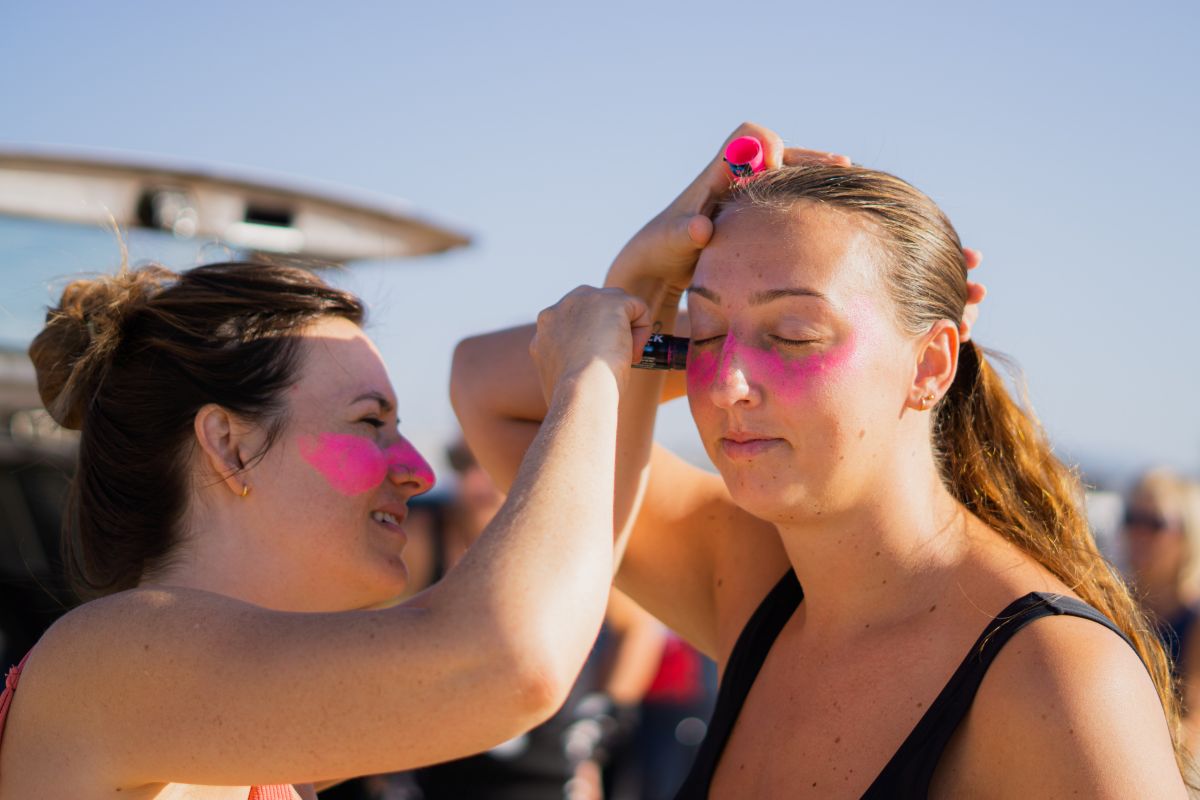
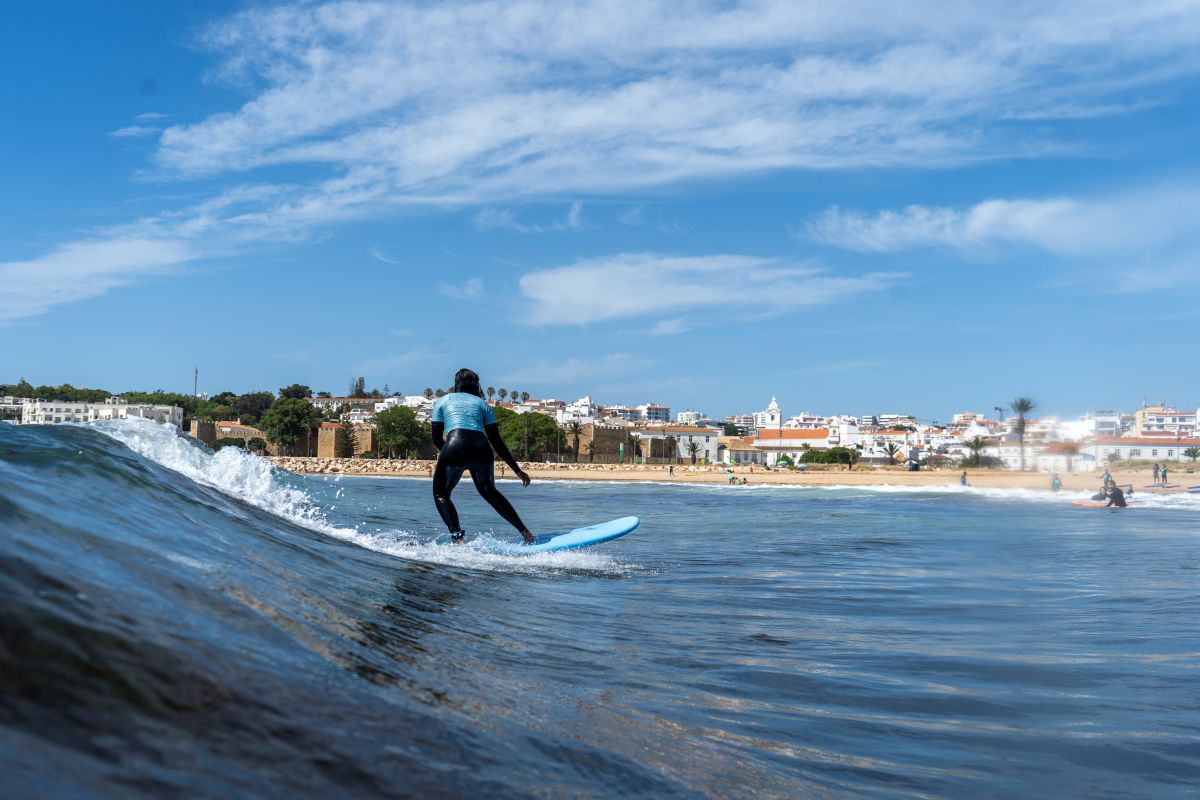
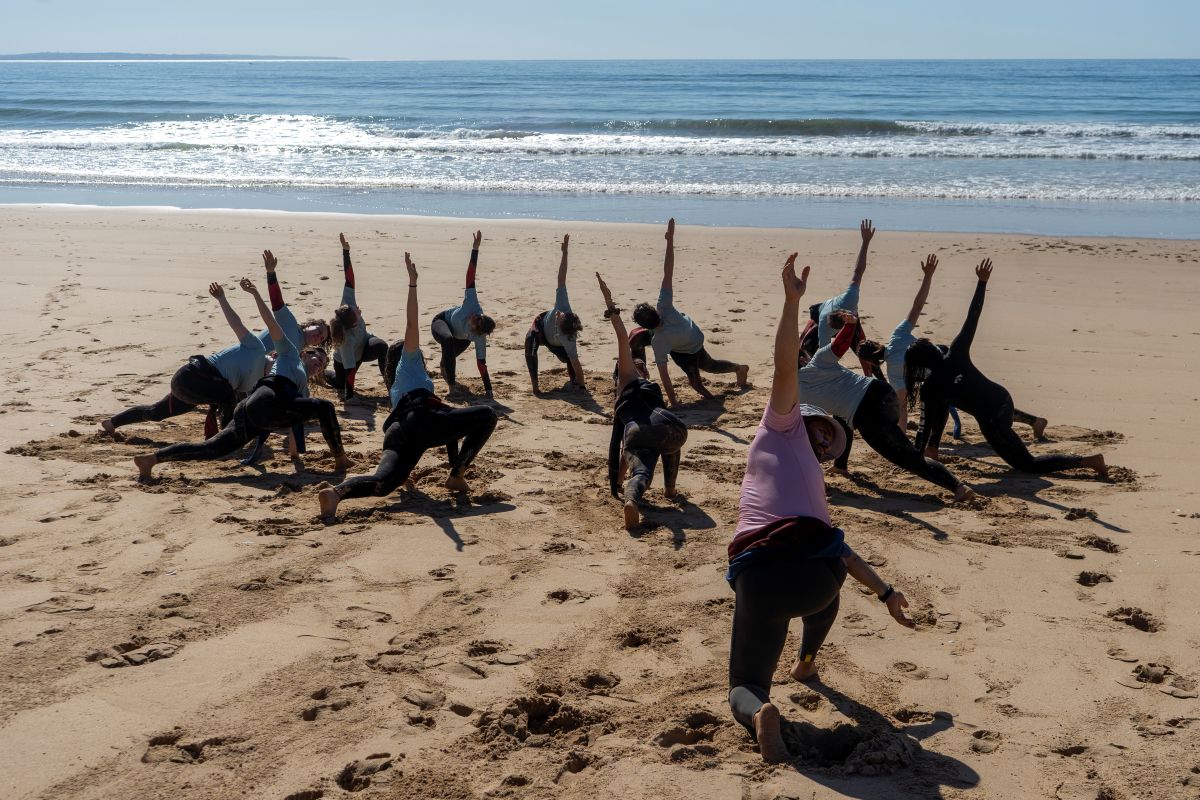
A week of waves, good people, learning and slow days on Portugal's southwest coast.
Peak season (June to September): Warmest water (20-22°C in the Algarve), most sunshine, longest days. But also the busiest beaches and highest prices. July and August sell out months ahead at popular camps. Waves tend to be smaller and cleaner, which is actually ideal for beginners.
Shoulder season (April-May, October-November): Our favourite time. Fewer crowds, more consistent swell, and the weather is still comfortable (18-22°C air, 17-19°C water). You’ll need a slightly thicker wetsuit in October but nothing dramatic. Prices are often 15-20% lower than peak.
Winter (December to March): Bigger waves, colder water (14-16°C), stronger winds. Not ideal for beginners unless you’re comfortable in rougher conditions. Some camps close for winter entirely. The Algarve stays milder than the central coast, so it’s the best bet if you insist on a winter trip. You’ll want a 4/3mm wetsuit and possibly boots and gloves in January.
Most surf camps provide all the gear. But here’s a quick packing list for everything else:
Don’t bring your own surfboard unless you’re intermediate or above. The camp will have boards suited to your level, and foam boards are much more forgiving when you’re learning.
We’ve been doing this for over fifteen years. Here’s what makes us wince when we see other camps advertising.
“Unlimited surf lessons.” Your body can’t handle unlimited surf lessons. If a camp promises this, they’re either exaggerating or they don’t understand beginner surfers. Two sessions a day is already a lot for your first week.
No mention of instructor qualifications. A recognised coaching qualification should be standard. If they don’t mention it, ask. Your instructor should also be a qualified lifeguard.
Only stock photos on the website. If you can’t see real photos of the accommodation, the food, and the actual surf lessons, be suspicious. Check Google reviews for guest photos.
Rock-bottom prices. Running a proper surf camp in Portugal costs money. If a week all-inclusive costs less than €400, something’s being cut. Usually it’s the food, the instructor ratio, or the accommodation.
No reviews from the last 12 months. Things change. A camp that was great in 2022 might have new management, different instructors, or a leaky roof. Recent reviews matter.
Huge groups. If the camp doesn’t mention group sizes, assume the worst. Ask before you book. You should know exactly how many students will be in the water with your instructor.
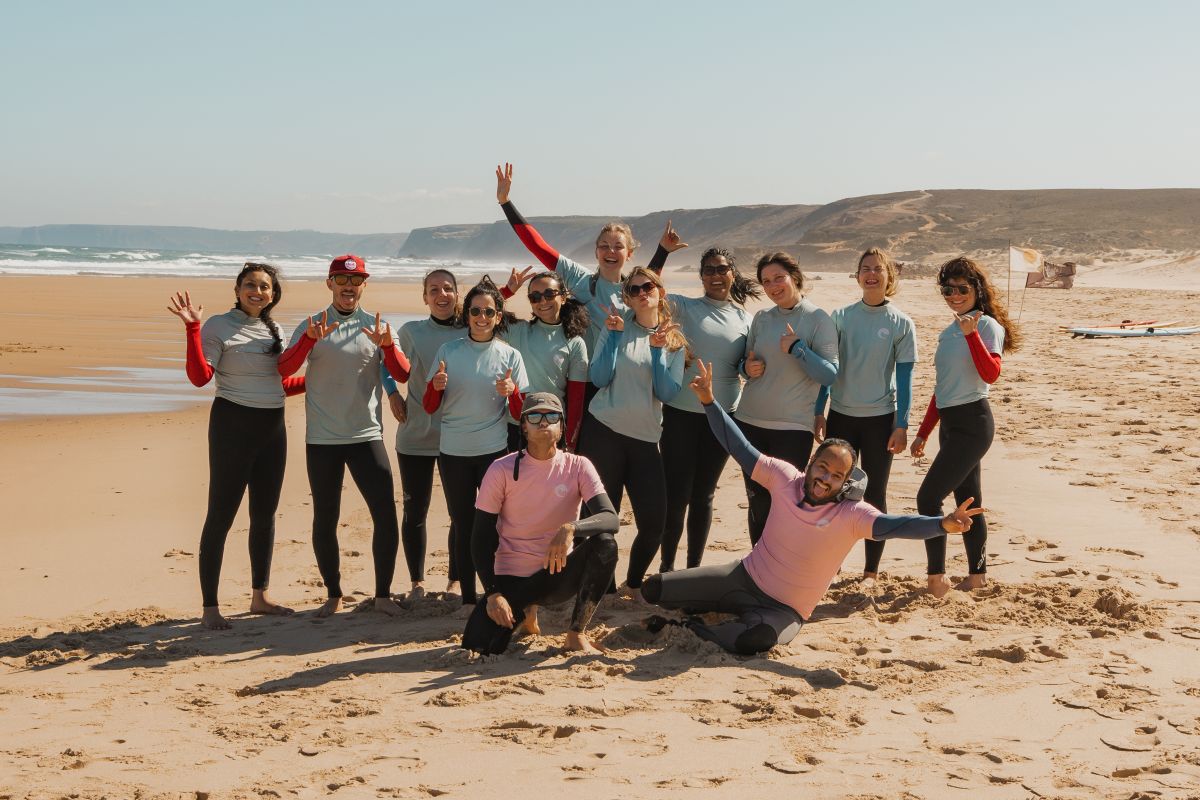
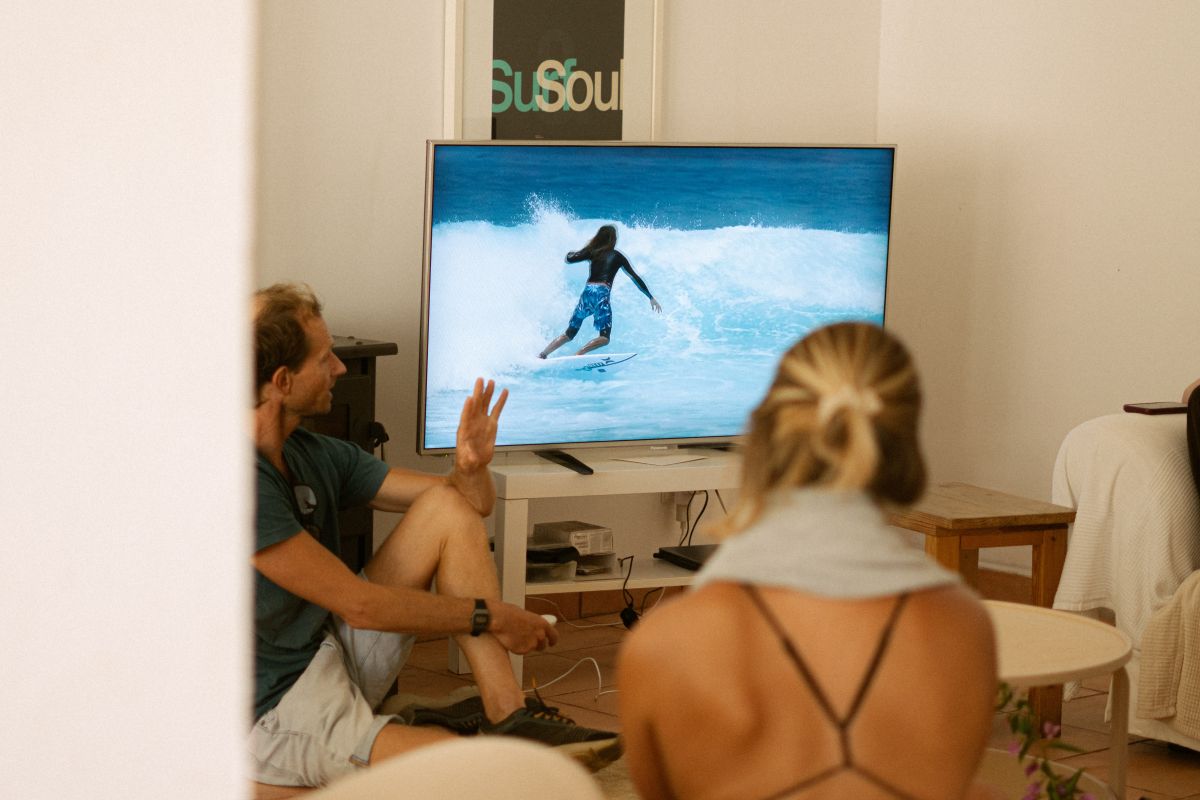
Soul and Surf Guest with coaches
Forget the Instagram grid. Think about what you actually want from the week.
Going solo? Look for a smaller camp where it’s easy to meet people at meals. Avoid the massive party hostels unless you love dorm life. Our retreats are popular with solo travellers because the small group size means you get to know everyone.
Travelling as a couple? Pick somewhere that offers more than surfing. If one of you doesn’t want to surf every day, you need a place with alternatives: yoga, excursions, a pool, or a village worth exploring.
Families? Check age limits. Some camps only take adults. Others welcome kids but don’t have separate kids’ programmes. Ask about instructor ratios for children specifically.
On a budget? The central coast (Peniche area) tends to be cheaper than the Algarve. Shoulder season (May or October) drops prices everywhere. A surf school package is usually better value than a boutique retreat.
Want the best surf? Ericeira and Peniche have more powerful, more varied waves. But the western Algarve has warm water, beach flexibility, and fewer crowds in the lineup.
Whatever you choose, don’t overthink it. Portugal is a brilliant place to surf. The worst surf camp in Portugal is still better than no surf camp at all.
And if our place sounds like your kind of thing? Come and stay with us. We’ll save you a spot in the water.
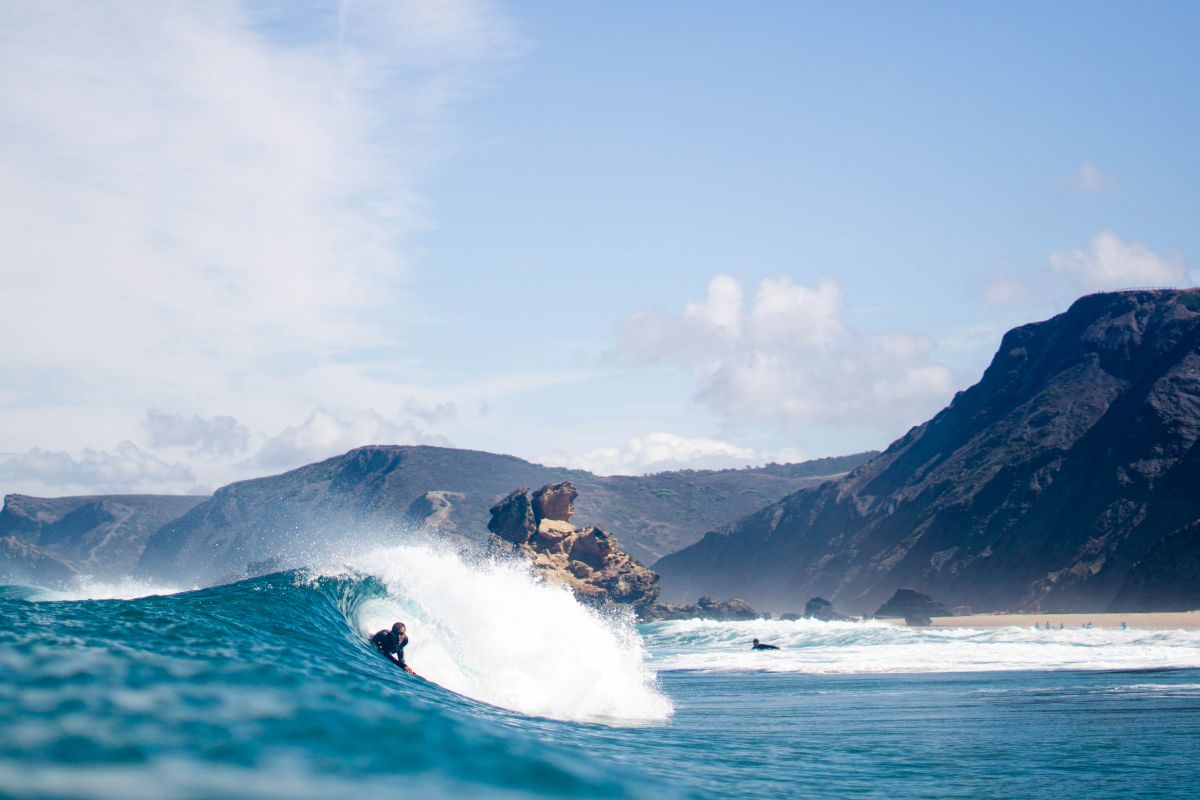
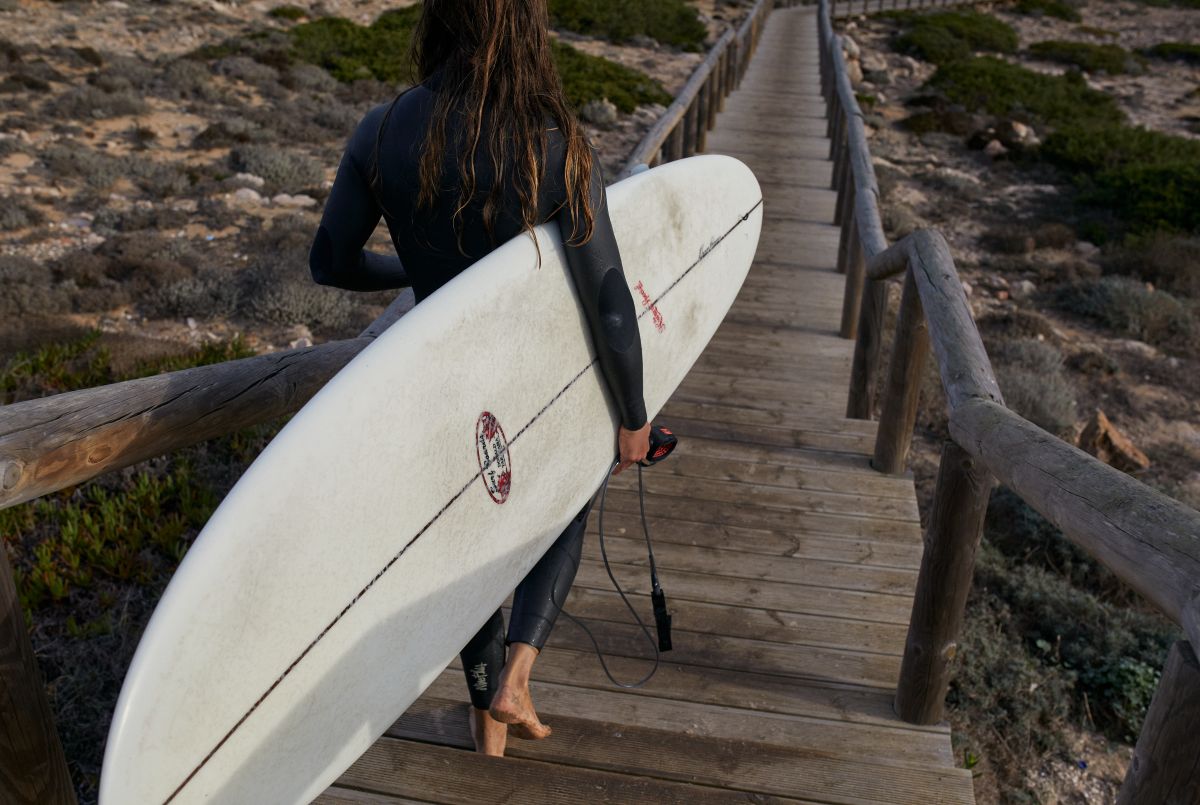
Photo capture by @joeliooo